Enviro News Asia, Brussels – Escalating military tensions in the Middle East and the resulting surge in oil prices have prompted the Global Renewables Alliance to issue an urgent call to governments worldwide. In a statement released in Brussels in March 2026, GRA unveiled a five-step Renewables Action Plan, urging governments to accelerate the deployment of renewable energy in response to ongoing global energy price volatility.
The statement is backed by six GRA member associations representing the global renewable energy industry: the Global Wind Energy Council, Global Solar Council, Green Hydrogen Organisation, Long Duration Energy Storage Council, International Hydropower Association, and the International Geothermal Association. GRA emphasized that recent developments in the Middle East have once again exposed the fragility of a global energy system still heavily dependent on fossil fuels.
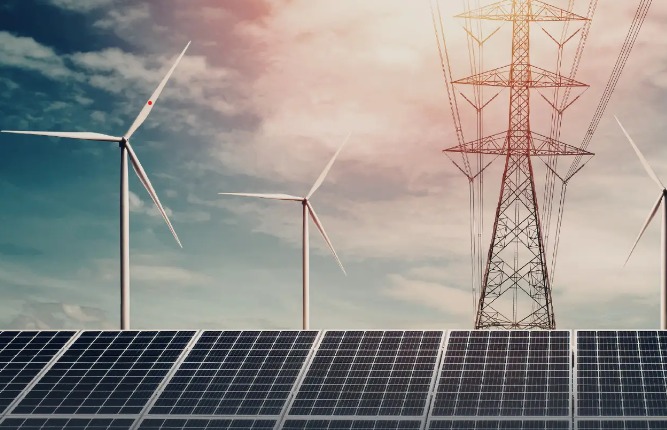
In its official statement, GRA described the recurring pattern of energy crises as evidence that the global energy system remains “stuck in the past.” From the oil shocks of the 1970s, the Gulf War in the 1990s, the gas crisis following Russia’s invasion of Ukraine in 2022, to the current Middle East tensions, the same vulnerabilities continue to resurface. With around three-quarters of countries still reliant on fossil fuel imports, GRA warned that price shocks can rapidly spread across the global economy, fueling inflation and threatening millions of jobs and livelihoods. Renewable energy technologies—including wind, solar, hydropower, geothermal, and energy storage—are identified as the fastest and most cost-competitive pathway toward long-term energy resilience.
The five key actions proposed by GRA include: first, implementing emergency measures to fast-track permitting for renewable energy projects; second, strengthening power grids and expanding energy storage capacity to address distribution bottlenecks; third, mobilizing finance by de-risking public-private investments through preferential interest rates and shifting capital away from carbon-intensive industries; fourth, accelerating electrification across sectors such as transport, heating, and industry; and fifth, developing robust industrial strategies to reinforce global clean energy supply chains. GRA noted that countries with stronger renewable capacity, grid infrastructure, and storage systems have proven more resilient to recent market disruptions.
The alliance’s message reinforces long-standing calls from the international community. António Guterres, Secretary-General of the United Nations, previously stated, “There are no price spikes for sunlight and no embargoes on wind. The fastest path to energy security, economic security, and national security is clear: accelerate the just transition from fossil fuels to renewable energy.”
GRA further stressed that the current crisis should catalyze more coordinated international cooperation toward a renewable, electrified, and resilient energy system. It also urged governments to reassess their exposure to fossil fuel price volatility and respond with comprehensive emergency policy packages. (*)