Enviro News Asia, Montpellier — A new international study has revealed that tropical eucalyptus plantations can capture carbon at rates significantly higher than natural tropical forests, offering important insights into their potential role in climate change mitigation.
The research, published in the scientific journal Global Change Biology, was coordinated by researchers from the French Agricultural Research Centre for International Development (CIRAD) and Brazilian partners. The study provides the first long-term assessment of carbon accumulation in tropical eucalyptus plantations, based on continuous measurements collected over a 14-year period in southern Brazil.
Researchers found that eucalyptus plantations can absorb up to 20 tonnes of carbon per hectare annually, far exceeding the carbon sequestration rates of most tropical rainforests, which typically absorb less than six tonnes of carbon per hectare each year.
According to Joannes Guillemot, a forest ecophysiology researcher at CIRAD, the findings help address a major knowledge gap regarding the climate mitigation potential of commercial forest plantations.
“Under the Bonn Challenge, the international community committed to restoring 350 million hectares of forests and degraded land by 2030. Nearly half of that area currently consists of commercial plantations. Our work sought to evaluate their actual capacity to capture carbon,” Guillemot said.
The study found that after harvesting and replanting, eucalyptus plantations rapidly return to functioning as carbon sinks, offsetting emissions generated during clear-cutting operations within approximately two years.
Despite the strong short-term carbon uptake, researchers cautioned against assuming that eucalyptus plantations provide permanent carbon storage. The study concluded that the long-term carbon balance of commercial plantations is nearly neutral because the amount of carbon removed through harvested timber is roughly equal to the carbon captured during each growth cycle.
As a result, while eucalyptus plantations contribute significantly to short-term carbon sequestration, they do not necessarily accumulate carbon over the long term in the same way as natural forests.
Researchers noted that future studies will examine the full life-cycle impacts of wood products derived from eucalyptus plantations, including paper pulp, charcoal for steel production, and engineered wood products. These analyses are expected to provide a more comprehensive understanding of the sector’s contribution to the bioeconomy and climate mitigation.
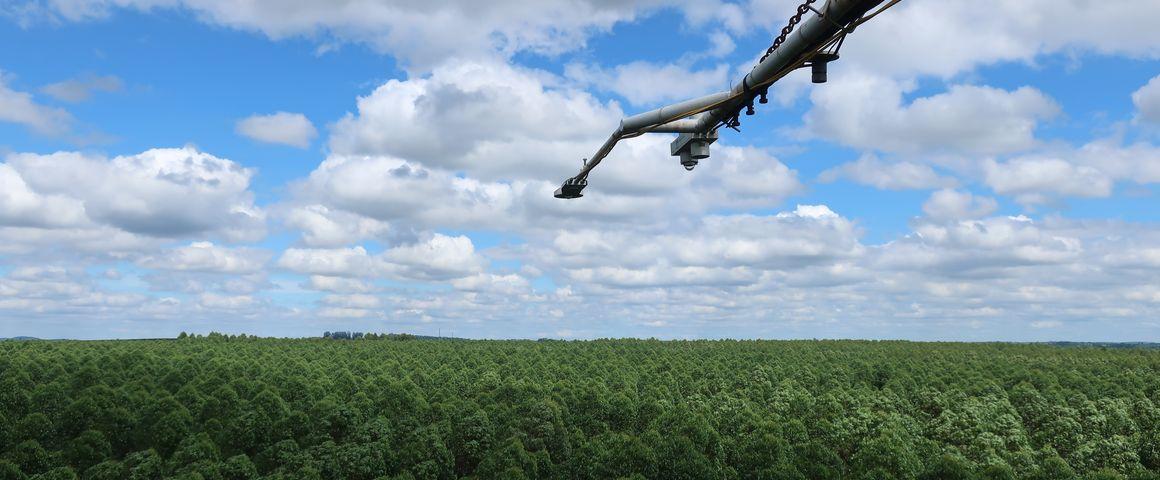
The findings were generated through the EUCFLUX project, a highly instrumented research site that has monitored carbon fluxes continuously for 14 years. Scientists say such long-term ecological monitoring is essential for understanding forest responses to climate change and developing effective adaptation and mitigation strategies.
The study reflects more than two decades of collaboration between CIRAD, the Instituto de Pesquisas e Estudos Florestais (IPEF), the University of São Paulo’s ESALQ campus, and major forestry companies operating in Brazil. Researchers believe the results will help improve sustainable tropical forest management while informing global climate and restoration policies. (*)