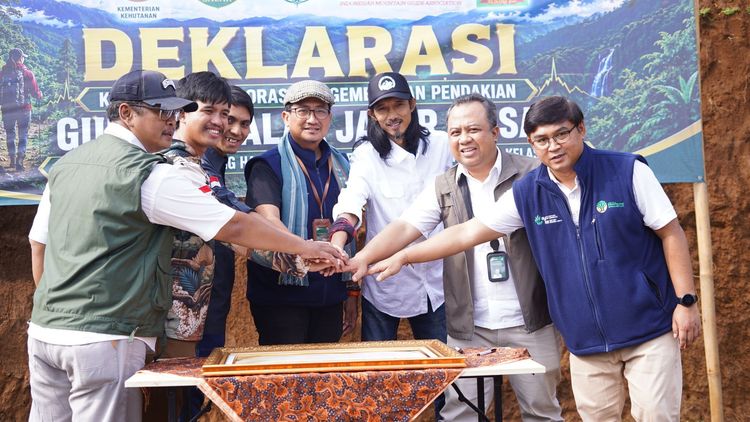
Enviro News Asia, Bogor – The Gunung Halimun Salak National Park Office (TNGHS), together with the Ministry of Forestry’s Directorate of Environmental Services Utilization, Yayasan Gunung Parama Indonesia (YGI), the Indonesian Mountain Guide Association (APGI), CV Siliwangi Adventure, the Tamansari Village government, community groups, and other stakeholders, held a Declaration of Collaborative Commitment for the Development of the Ajisaka Trail as a Nationally Standardized Hiking Route at the Ajisaka Trailhead, Gunung Salak I National Park Management Resort, Bogor.
The declaration marks the first step in consolidating multi-stakeholder commitment and support for developing the Ajisaka Trail as a safe, nationally standardized, sustainable, transparent, inclusive, and collaborative hiking route. It also forms part of the Mountain Revitalization Program (Bedah Gunung) initiated by the Ministry of Forestry’s Directorate of Environmental Services Utilization as an effort to improve the quality of nature-based trekking tourism governance in conservation areas.
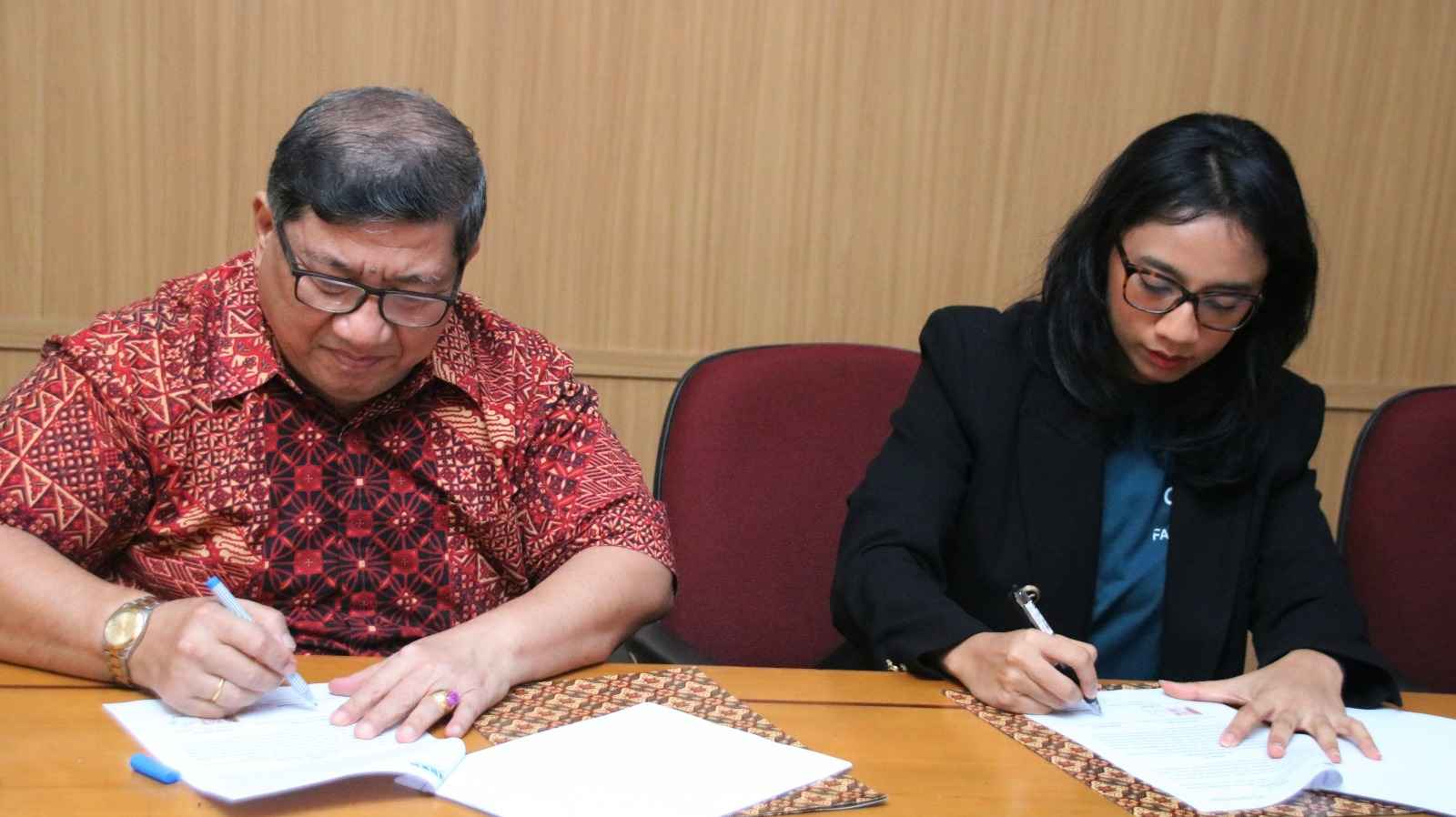
The declaration was signed by the Head of the Gunung Halimun Salak National Park Office, the Chairman of Yayasan Gunung Parama Indonesia, the Chairman of the Indonesian Mountain Guide Association, and the Director of CV Siliwangi Adventure, and was witnessed by the Head of the Nature Tourism Environmental Services Utilization Sub-directorate of the Ministry of Forestry.
Through the declaration, all parties committed to supporting the development of the Ajisaka Trail through the formulation of Standard Operating Procedures (SOP), institutional strengthening, human resource capacity building, trail auditing and reorganization, the implementation of digital services, and ongoing monitoring and evaluation.
As a follow-up, an audit of the Ajisaka Trail will be conducted based on Indonesian National Standard (SNI) 8748:2019 on Mountain Climbing Management, carried out collaboratively by the Ministry of Forestry’s Directorate of Environmental Services Utilization, the TNGHS National Park Office, YGI, APGI, CV Siliwangi Adventure, and relevant stakeholders. The audit results will serve as the basis for drafting an improvement and development plan for the trail, including trail reorganization, enhanced safety features, and the provision of infrastructure such as entrance gates, ticketing posts, shelters, toilets, and information facilities, alongside digitalization of services and hiking monitoring.
Head of the Nature Tourism Environmental Services Utilization Sub-directorate Johan Setiawan said the Directorate supports the TNGHS National Park Office’s efforts to improve trekking tourism governance through the Mountain Revitalization Program.
“The Bedah Gunung program aims to drive improvements in trekking tourism management through the application of standards, capacity building for managers, enhanced safety, and the involvement of multiple stakeholders. We support efforts to develop the Ajisaka Trail into a safe, high-quality, nationally standardized hiking route that maintains the conservation function of the area,” Johan said.
Head of the Gunung Halimun Salak National Park Office Didid Sulastiyo said the declaration is an important milestone in strengthening multi-party synergy to improve the quality of trekking tourism management in the conservation area.
“Gunung Halimun Salak National Park’s primary function is as a conservation area. That is why the development of trekking tourism must deliver a safe and high-quality visitor experience without diminishing the area’s protective function. Through this declaration, we want to strengthen collaboration among all parties to achieve professional, nationally standardized, and sustainable trekking governance,” Didid said.
YGI Chairman Andi Ronikus described the declaration as a strategic step toward transforming the management of hiking trails in conservation areas, saying that strong collaboration can deliver a quality experience for hikers while protecting the environment.
The Indonesian Mountain Guide Association Chairman stressed that improving trekking governance standards must be accompanied by the strengthening of human resource capacity among guides, porters, volunteers, and field managers, so that safety standards and service quality can continue to improve.
A key focus of the Ajisaka Trail’s development is the application of Zero Waste and Zero Accident principles, under which all parties are committed to building a culture of responsible trekking, improving hiker safety, reducing waste on the trail, and maintaining the integrity of the conservation area.
Through the declaration, the Gunung Halimun Salak National Park Office, the Ministry of Forestry’s Directorate of Environmental Services Utilization, and their partners have committed to making the Ajisaka Trail a nationally standardized hiking route that can serve as a model for trekking tourism management in conservation areas, delivering benefits for visitors and surrounding communities while supporting the sustainable conservation of natural resources and ecosystems. (*)