Enviro News Asia, Machakos County — Access to high-quality tree seedlings is helping farmers in Kenya’s Machakos County increase fruit production, improve household nutrition, and generate more stable incomes, according to Landscape Alliance.
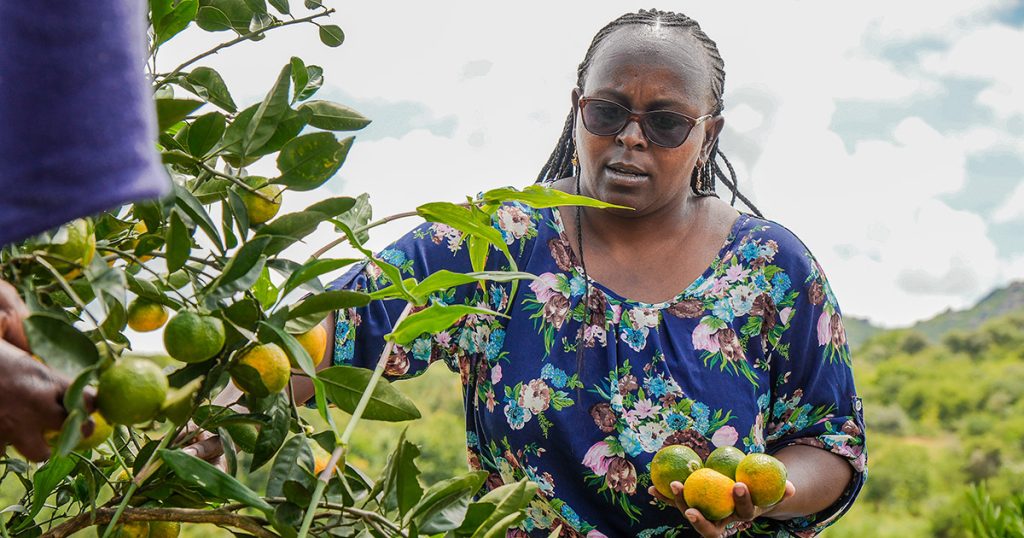
One of the beneficiaries is Sarah Kori, a farmer in Yatta who transformed her farm into a productive fruit orchard after initially struggling with poor-quality planting materials. Her first attempt to grow pixie oranges failed when the seedlings she purchased produced limes instead, highlighting the importance of obtaining certified seedlings from reliable sources.
Sarah later received quality seedlings from the Kenya Agricultural and Livestock Research Organization (KALRO), which works with Landscape Alliance to conserve fruit-tree genetic resources through a field genebank supported by the Australian Centre for International Agricultural Research (ACIAR).
The certified planting materials included climate-resilient varieties of mango, apple, papaya, grapefruit, Washington navel orange, minneola tangelo, avocado, pomegranate, and other citrus species suitable for changing environmental conditions.
Alice Muchugi, Theme Leader for Tree Diversity and Productivity at Landscape Alliance, said high-quality, true-to-type seedlings provide farmers with confidence that they are cultivating the intended fruit varieties with predictable yields, fruit quality, and maturity periods while reducing production risks.
In addition to supplying seedlings, Landscape Alliance trained Sarah in nursery establishment, tree management, and vegetative propagation techniques such as grafting. She later established her own nursery on a half-acre of land, producing certified fruit-tree seedlings for local farmers while expanding fruit cultivation across her 23-acre farm.
Through grafting, Sarah now produces fruit trees that begin bearing fruit within two to three years, significantly faster than seed-grown trees, which typically require six to ten years to mature.
Landscape Alliance research assistant Joyce Chege said selecting healthy, disease-free scions is essential for successful grafting because the scion determines fruit quality, while the rootstock contributes drought tolerance, disease resistance, and vigorous growth.
Although prolonged dry seasons remain a major challenge, Sarah uses solar-powered irrigation pumps, water storage ponds, organic manure from livestock, and environmentally friendly pest management practices to maintain production while minimizing chemical use.
Fruit farming has become Sarah’s most profitable agricultural enterprise, providing a reliable source of income through sales to local markets and supermarkets while ensuring her family has year-round access to nutritious fruits. (*)