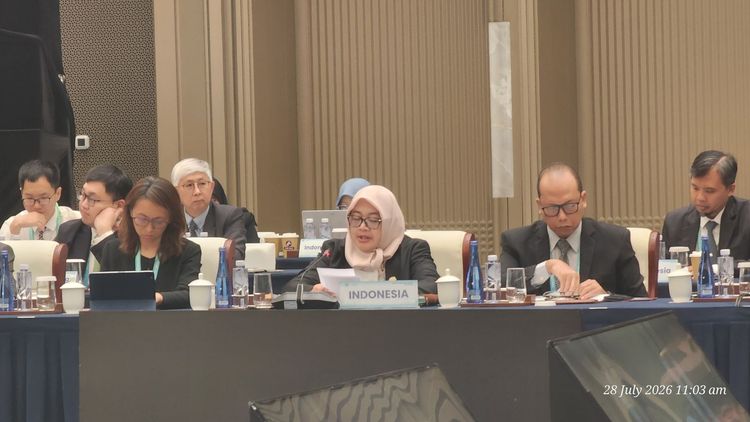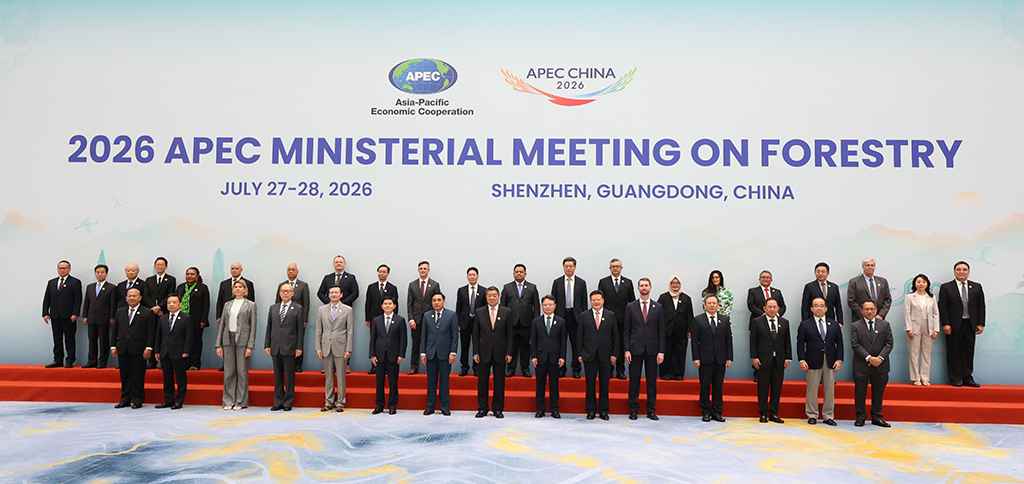
Enviro News Asia, Shenzhen — Forestry ministers and representatives from APEC member economies reaffirmed their commitment to strengthening sustainable forest management, combating illegal logging, and promoting trade in legally harvested forest products during the 2026 APEC Ministerial Meeting on Forestry (MMRF6), held in Shenzhen, China, on July 27–28.
The joint ministerial statement underscored APEC’s shared aspiration to build an open, dynamic, resilient, and prosperous Asia-Pacific region in line with the APEC Putrajaya Vision 2040. Ministers also recognized forests as essential to economic growth, biodiversity conservation, ecological well-being, and climate resilience across the region.
The meeting highlighted the important role of the APEC Experts Group on Illegal Logging and Associated Trade (EGILAT) in promoting policy dialogue, information sharing, capacity building, and cooperation to combat illegal logging while facilitating the trade of legally harvested forest products.
Ministers reaffirmed their commitment to strengthening evidence-based sustainable forest management, forest landscape restoration, biodiversity conservation, and efforts to halt and reverse forest loss and degradation. They also emphasized the ecological and economic importance of forests, including mangrove ecosystems, in supporting livelihoods, preventing land degradation, reducing disaster risks, and enhancing community well-being.
The joint statement outlined eight priority areas for regional cooperation. These include intensifying efforts against illegal logging, promoting sustainable forest management and restoration, strengthening biodiversity conservation and forest governance, expanding policy dialogue and transparency under EGILAT, supporting protected areas and Other Effective Area-Based Conservation Measures (OECMs), increasing investment and financing opportunities for the forestry sector, enhancing cooperation in urban forestry and water resource management, and encouraging innovation in forest-based industries, including non-timber forest products, circular bioeconomy initiatives, agroforestry, and ecosystem service valuation.
APEC members also agreed to strengthen collaboration with international and regional organizations, the private sector, industry, and micro, small, and medium-sized enterprises (MSMEs) to support sustainable forestry goals and promote higher-value forest products through innovation and responsible investment.
The ministers concluded by expressing appreciation to the People’s Republic of China for hosting the meeting in Shenzhen and reaffirmed their commitment to advancing regional cooperation that supports sustainable forest management, legal forest product trade, biodiversity conservation, climate resilience, and inclusive economic development across the Asia-Pacific. (*)