Enviro News Asia, Jakarta – A new chapter has begun in the effort to save what remains of Sumatra’s tropical rainforest in Riau Province. Universitas Pahlawan Tuanku Tambusai (UPTT) in Bangkinang City, Riau, in cooperation with the National Research and Innovation Agency (BRIN), is preparing Bukit Pantian Ragi and its surroundings, covering 2,139 hectares, as a community-based preservation area under a new conservation scheme regulated by Law No. 32 of 2024.
The initiative was born from deep concern over the pace of deforestation and forest degradation in Riau, which is increasingly triggering floods, wildlife conflicts, and forest fires. The proposed area is one of the last remaining fragments of Sumatra’s tropical rainforest still standing near the UPTT campus. If designed within a connected ecosystem network, the preservation area would support the conservation of the UNESCO Tropical Rainforest Heritage of Sumatra, which continues to face mounting anthropogenic pressures year after year.
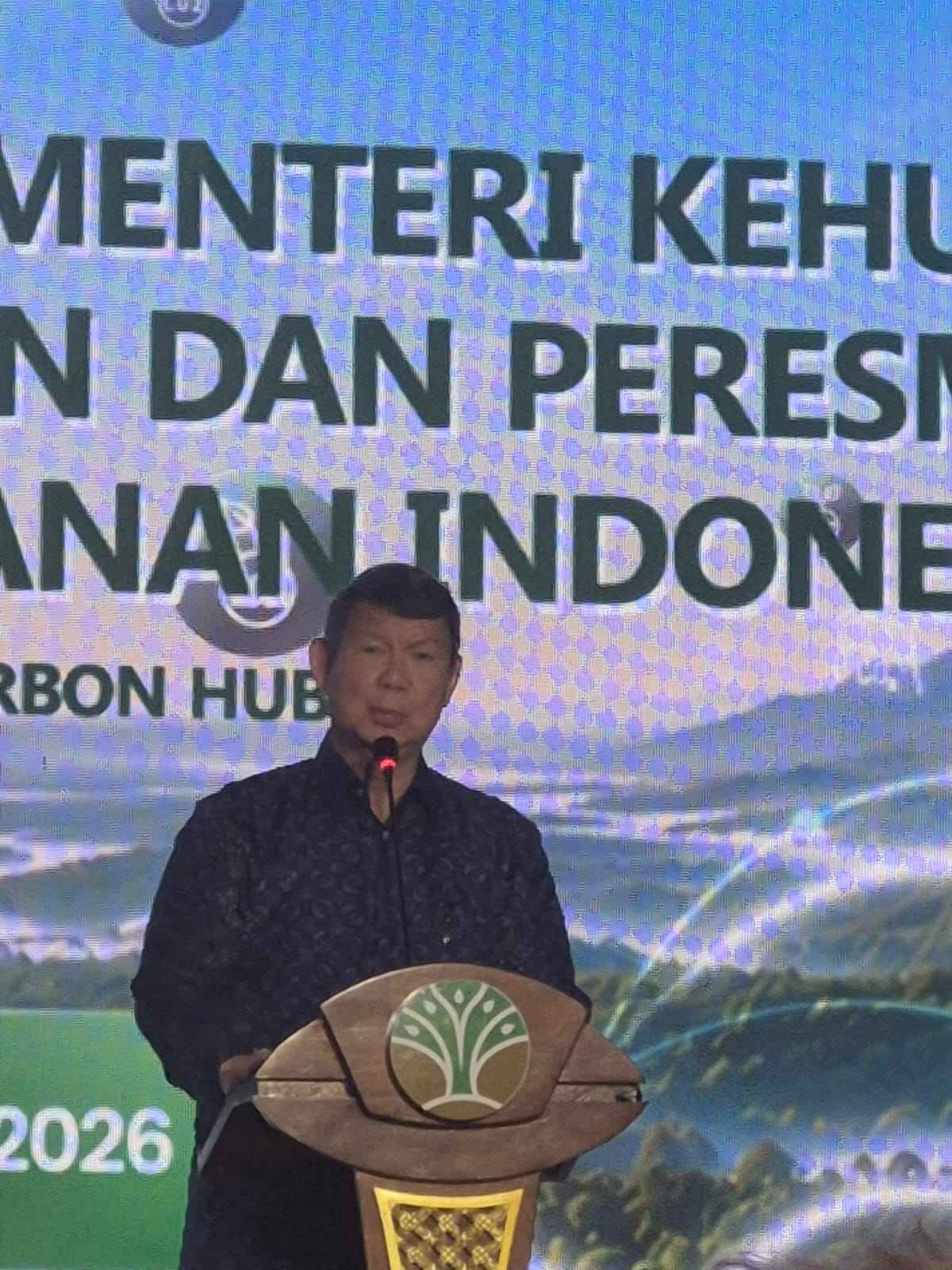
BRIN Center for Ecology Research Principal Expert Professor Hendra Gunawan described the preservation area concept as an important breakthrough in Indonesia’s conservation policy, speaking during a technical briefing at UPTT on Saturday (7/4).
“Imagine, around 60 to 70 percent of Indonesia’s biodiversity lies outside formal conservation areas, yet protection for these areas has remained limited. This new regulation opens up opportunities to protect high conservation value areas outside nature reserves and conservation zones,” Hendra said.
He explained that preservation areas can be applied to protection forests, production forests, and other land-use areas with high conservation value, taking various forms including ecological corridors, buffer zones, and areas managed by communities based on local wisdom.
Hendra stressed that conservation’s goal is not only to protect flora and fauna but also to maintain life-supporting functions while placing communities as the primary subjects of management.
“Preservation areas are critically important because they have the potential to serve as corridors for endangered endemic wildlife such as the Sumatran tiger, sun bear, and Sumatran pig-tailed macaque, while also protecting the water catchment area supplying flow to the Kampar River,” he explained.
Hendra outlined the systematic steps required to establish a preservation area, from forming a team and conducting field surveys to data analysis and feasibility assessment. An area must lie outside existing conservation zones, have clear geographical boundaries, receive support from rights holders, and meet certain ecological and social criteria. He noted that at least two of four ecological criteria, such as high biodiversity or unique ecosystems, and one of three social criteria must be met.
Once established, Hendra said, management of preservation areas must be adaptive and sustainable through zoning, community empowerment programs, and regular ecological and social monitoring.
“The keys to success are multi-party collaboration, sustainable financing, and respect for the rights of indigenous and local communities. Conservation must be able to maintain a balance between nature protection and people’s welfare,” he concluded.
With BRIN’s guidance, UPTT hopes Bukit Pantian Ragi can become a model for the development of community-based preservation areas in Sumatra while strengthening biodiversity protection outside formal conservation zones. (*)