

Enviro News Asia, Jakarta – Following the United States’ withdrawal from global efforts to tackle climate change, BRICS countries—Brazil, Russia, India, China, and South Africa—are prepared to take the lead on climate change issues at the international level. Climate change is a shared challenge and should not be affected by the unilateral stance of the United States.
“BRICS can unite in efforts to address climate change,” said South Africa’s Deputy Minister of Forestry, Fisheries, and the Environment, Narend Singh, on Monday (March 10, 2025).
BRICS has strengthened its position by proposing a draft agreement at the UN Biodiversity Conference (COP16) in Rome in February 2025. More than 140 countries gathered at COP16 in Rome agreed to raise $200 billion annually until 2030 for climate financing. This agreement was a positive breakthrough after the previous meeting in Colombia in October 2024 failed to reach a consensus on contributions, fundraising mechanisms, and oversight.
This climate financing agreement was reached at a high-level meeting led by the BRICS association (Brazil, Russia, India, China, and South Africa). COP16 President and Colombia’s Minister of Environment, Susana Muhamad, described the agreement as a victory for nature and multilateralism, especially in a year marked by political tensions and increasing diplomatic frictions.
Brazil’s lead negotiator at COP16, Maria Angelica Ikeda, stated that BRICS could fill the current void in multilateral negotiations. “BRICS can fill the gap that needs to be addressed in multilateral negotiations,” said Maria Angelica Ikeda. Brazil is preparing to host COP30 UNFCCC in November 2025.
Colombia’s Environment Minister Susana, who led the COP Biodiversity talks, said BRICS countries were working to be “bridge builders.” She emphasized that BRICS aims to create a global balance.
Although BRICS is ready to take over leadership in global climate action, several challenges remain, particularly in financing.
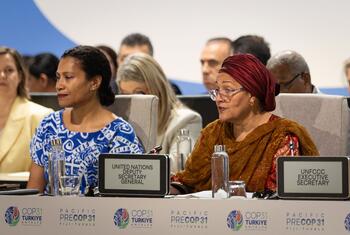
During COP29 in Baku, Azerbaijan, in November 2024, intense negotiations between wealthy nations and low-income countries resulted in a pledge from developed nations to provide $300 billion annually to support developing countries until 2035. Although this target is three times the previous commitment of $100 billion, it still represents only a fraction of the $1.3 trillion per year that developing countries claim they need. This financial debate is expected to continue at COP30 in Brazil later this year.