Enviro News Asia, Cibinong — Indonesia’s National Research and Innovation Agency (BRIN) is developing an Agro Techno Park concept to transform former mining land in East Kalimantan into integrated and sustainable livestock-based agricultural areas.
The initiative seeks to demonstrate how degraded post-mining areas can be converted into productive agribusiness landscapes through research, technology and innovation. Rather than focusing solely on livestock production, the proposed system would connect livestock with crops, animal feed, fisheries and other agricultural activities.
BRIN presented the concept during the Risnov Ternak Series #31 webinar on September 9, which discussed the prospects, challenges and opportunities of developing integrated livestock businesses on former mining land in East Kalimantan.
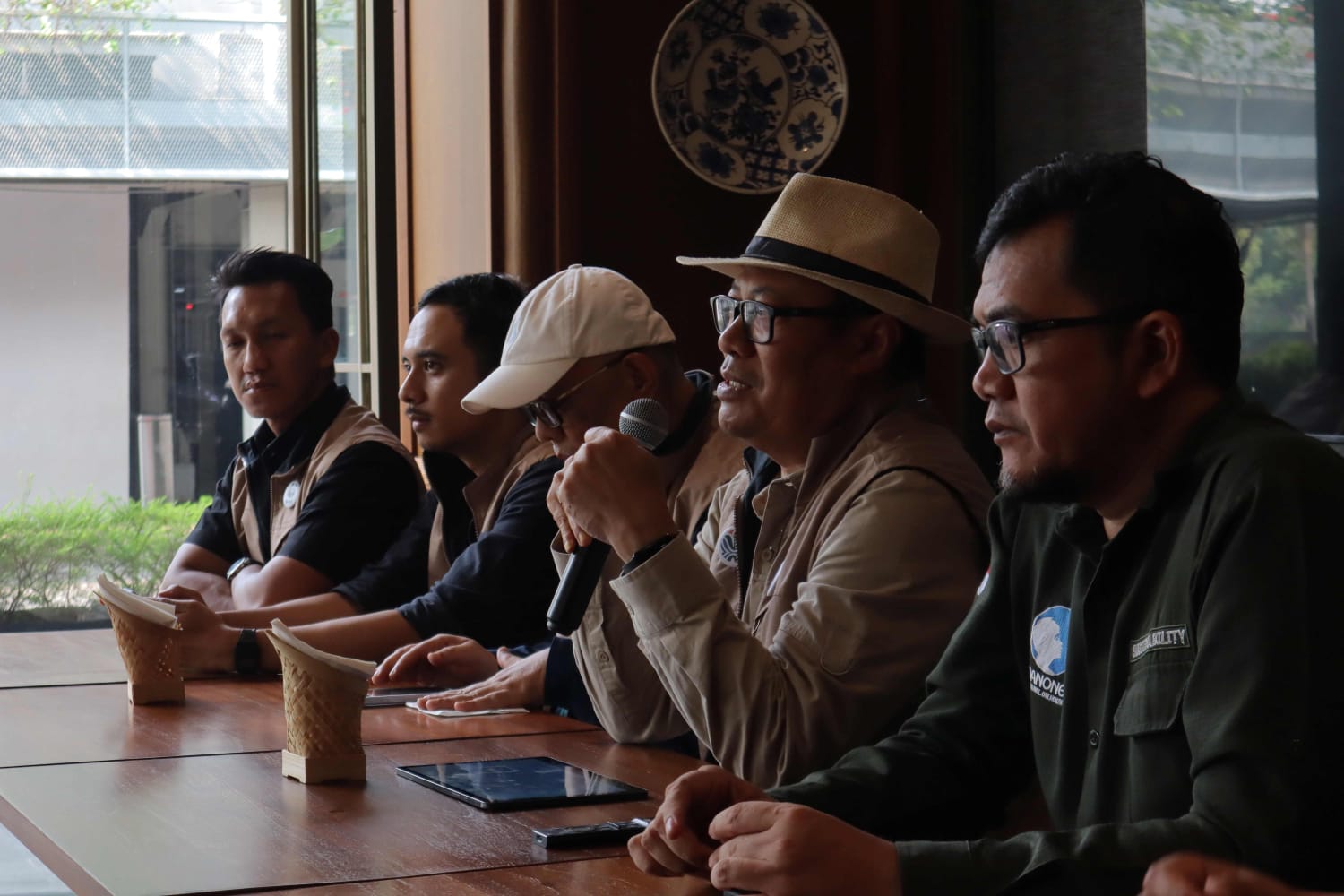
Santoso, Head of BRIN’s Research Center for Animal Husbandry under the Organization for Agricultural and Food Research, said livestock development on former mining areas requires a comprehensive approach because the environmental and soil conditions differ from those of conventional agricultural land.
“The objective is not simply to prove that livestock can be raised on former mining land. More importantly, we need to determine the appropriate business model, required technologies, operating components and conditions under which the enterprise can develop,” Santoso said.
He said an integrated livestock system should connect animals with crops, forage production and other agribusiness activities. Such integration can improve efficiency, create additional value and expand the economic benefits generated from the land.
BRIN Prepares Agro Techno Park Pilot
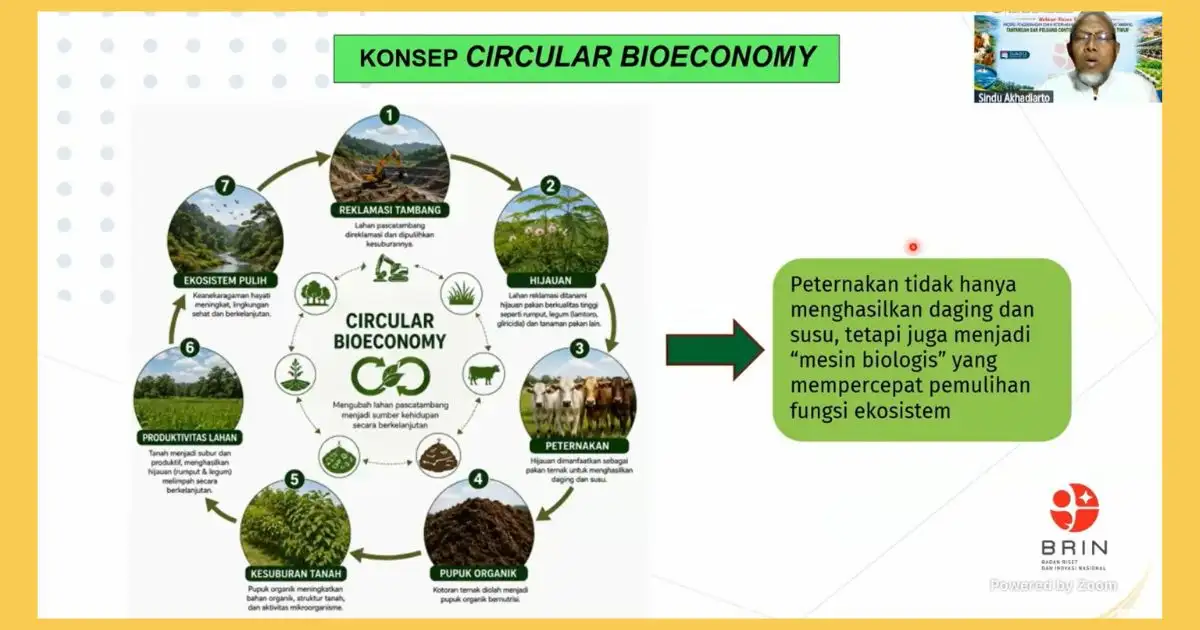
BRIN Principal Researcher Sindu Akhadiarto presented the agency’s proposal for an Agro Techno Park on former mining land in East Kalimantan.
The concept emerged from BRIN’s studies and field surveys conducted with the East Kalimantan provincial government to identify opportunities for converting former mining areas into productive zones supported by technology and innovation.
One proposed site is located in Loa Kulu, East Kalimantan, through cooperation between BRIN and PT Bramasta Sakti. The area is planned as a pilot for integrated agriculture combining livestock, fisheries, horticulture, food crops and plantations, supported by modern technology and smart farming.
Under the proposed model, livestock would serve a broader function than producing meat and eggs. Animal waste could be processed into organic fertilizer, while agricultural activities could supply forage and reduce biomass waste.
Sindu described the approach as a circular bioeconomy in which livestock becomes part of a broader biological production system that can help restore the economic productivity of former mining areas.
The Agro Techno Park is also envisioned as a collaborative ecosystem involving local governments, universities, businesses and BRIN. In addition to production and research, the site could support agro-education tourism and the development of integrated agricultural and livestock technologies that can be replicated in other areas with similar characteristics.
Prof. Taufan Purwokusumaning Daru, a professor at the Department of Animal Husbandry at Mulawarman University in Samarinda, provided an academic perspective on the challenges and opportunities of developing livestock businesses on former mining land in East Kalimantan.
PT Bramasta Sakti Director Wiwin Suhartanto also shared the private sector’s perspective, including experience and challenges in developing agribusiness and livestock activities on former mining areas.
BRIN said the webinar brought together researchers, academics, local government representatives and businesses to develop a shared understanding of how former mining land can be optimized.
The proposed Agro Techno Park model goes beyond simply converting post-mining land into livestock areas. It combines integrated production, smart farming, circular bioeconomy principles and multi-stakeholder collaboration to create productive and economically viable landscapes.
BRIN expects the approach to provide a sustainable model that can potentially be adapted to other former mining areas in Indonesia. (*)