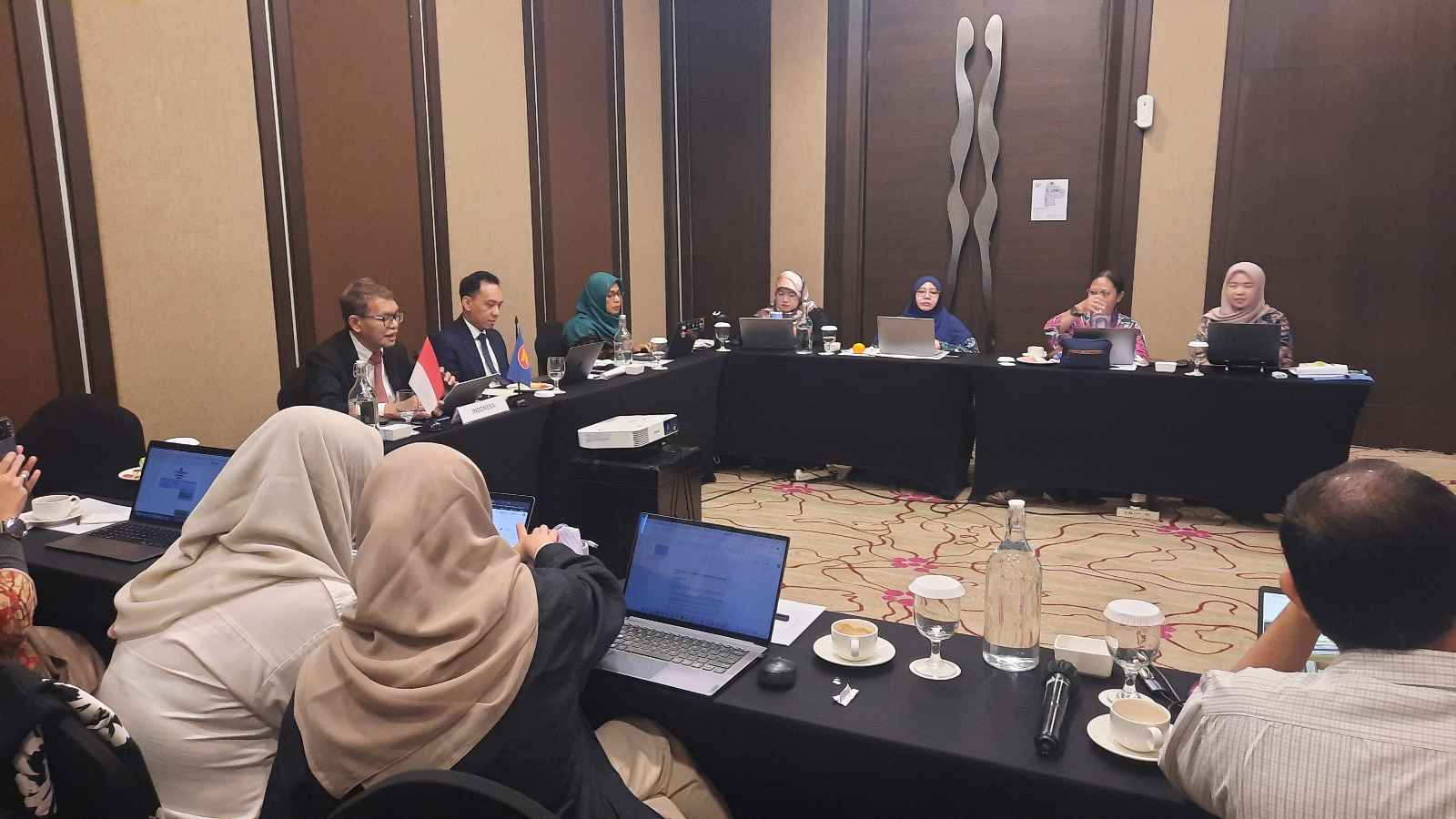
Enviro News Asia, Jakarta – Indonesia has called on Southeast Asian countries to ensure that regional environmental policies translate into concrete action and deliver measurable benefits to communities at the grassroots level. The call was made by the Ministry of Environment/Environmental Control Agency (KLH/BPLH) during the 37th Meeting of the ASEAN Senior Officials on the Environment (ASOEN) in Bandung from August 10–13, 2026.
The meeting focused on strengthening regional cooperation in addressing the three major planetary crises: climate change, biodiversity loss, and environmental pollution. It also discussed the implementation of the Southeast Asia Environmental Strategic Plan 2026–2035 in support of the ASEAN Community Vision 2045.
Erik Teguh Primiantoro, Senior Advisor to the Minister for International Relations and Environmental Diplomacy at KLH/BPLH and head of the Indonesian delegation, emphasized the need for a fundamental shift in regional environmental governance.
“Indonesia has proposed the concept of Ecological Conversion, or ‘Ecological Repentance,’ as an ethical foundation for implementing Sustainable Consumption and Production (SCP),” Erik said. He explained that the concept encourages changes in values and behavior toward more responsible production, consumption, and natural resource management.
As the regional lead country for Sustainable Consumption and Production, Indonesia is promoting the integration of the principle into cross-sectoral policies. The approach will also be linked with Environmental, Social, and Governance (ESG) frameworks and sustainability reporting as tools for stronger evaluation and accountability.
The Indonesian initiative received a positive response from other ASEAN members. Atty. Jonas R. Leones of the Philippines, who chaired the meeting, said the strategic environmental framework was important and timely in responding to increasingly complex regional environmental challenges after 2025.
To strengthen implementation, KLH/BPLH proposed an integrated implementation chain linking scientific knowledge, geospatial data, spatial planning, technology standards, and green financing instruments. The model is intended to turn environmental knowledge into measurable actions that can be implemented and replicated across ASEAN countries.
Indonesia also highlighted the importance of strategic alignment and gap-filling in cooperation with development partners. Mapping technology, innovation, and financing needs more precisely could help prevent overlapping programs while maximizing their impact on local communities.
In addressing the three planetary crises, Indonesia presented several integrated approaches. For biodiversity governance, Indonesia proposed strengthening regional biodiversity centers through initiatives such as regional Red List assessments, efforts to address the links between pollution and biodiversity, and stronger ecosystem financing.
For climate resilience, Indonesia highlighted the use of geospatial data-based Vulnerability, Risk and Adaptation Assessments to support risk-informed decision-making. Meanwhile, on plastic pollution, Indonesia expressed its readiness to contribute to global diplomacy on the Global Plastics Pollution Treaty by promoting a full life-cycle approach, science-based policies, and strong national implementation.
The meeting underscored Indonesia’s position that the success of regional environmental cooperation should ultimately be measured by tangible improvements on the ground. Indonesia identified three key transformation priorities: shifting from fragmented policies toward integrated approaches, turning knowledge and policy documents into implementation, and ensuring that environmental initiatives generate measurable outcomes that improve community welfare. (*)