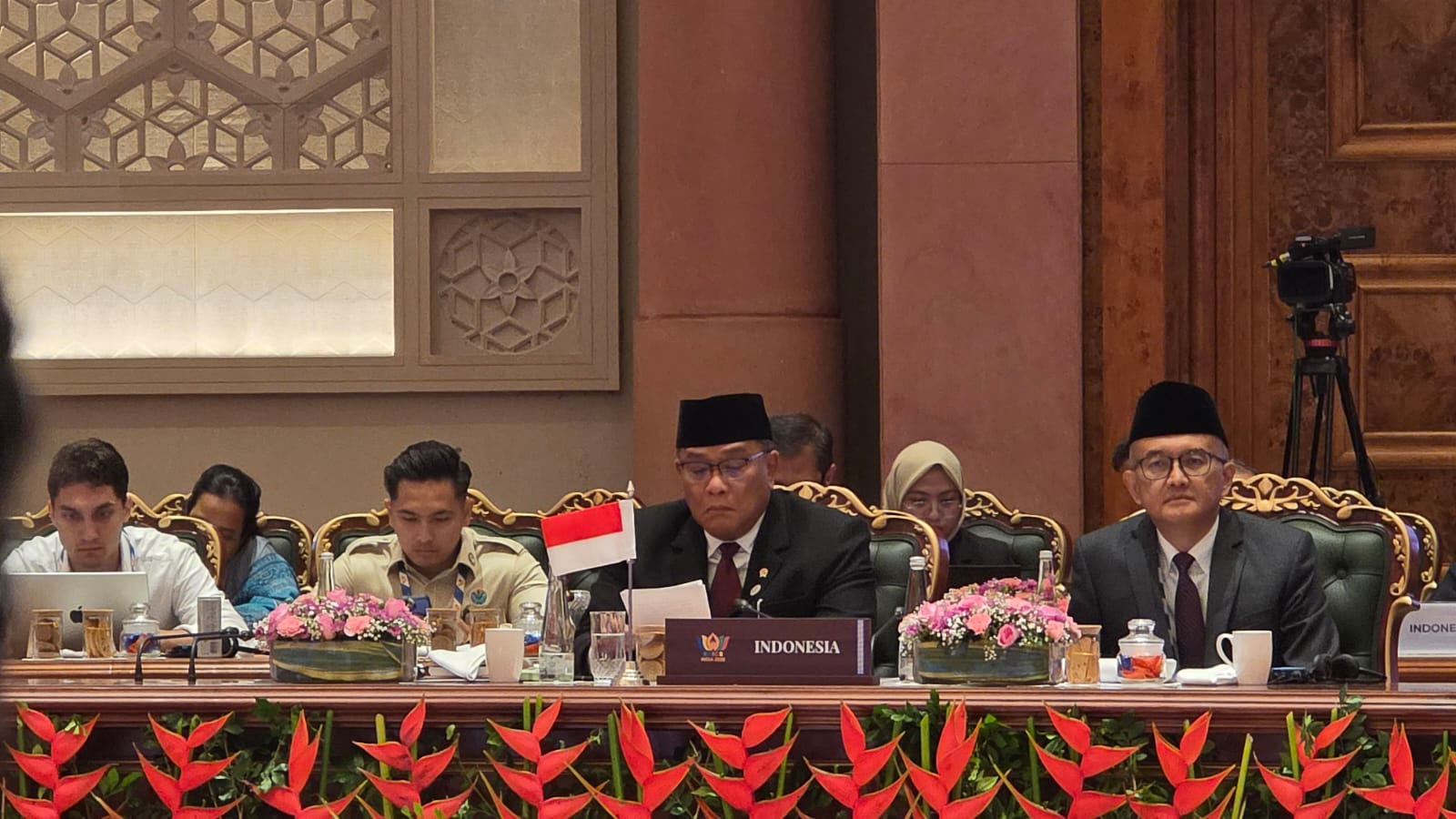
Enviro News Asia, Jeju – As part of the series of events at the 7th APEC Education Ministers’ Meeting, Indonesia’s Minister of Primary and Secondary Education, Abdul Mu’ti, held a bilateral meeting with the Governor of Jeju Province, South Korea, on Tuesday (May 13, 2025).
Accompanied by the Head of the Agency for Education Standards, Curriculum, and Assessment (BSKAP), Toni Toharudin, and Indonesia’s Education and Culture Attaché to Korea, Amaliah Fitriah, Minister Mu’ti discussed potential cooperation in renewable energy management and waste management within the framework of eco-friendly schools.
Regarding eco-friendly schools, Minister Mu’ti highlighted the opportunity for cooperation in the utilization of solar power and other renewable energy sources to support educational institutions in regions that are not yet connected to the power grid.
“Some areas in Indonesia still lack electricity. Utilizing renewable energy to provide power in these areas would greatly support eco-friendly schools,” he said, as quoted in the official statement from Indonesia’s Ministry of Primary and Secondary Education.
Furthermore, Minister Mu’ti pointed out that waste management in Indonesia, particularly in school environments, also needs improvement.
This, he said, could become a broader cooperation opportunity between Jeju Province and the Indonesian Ministry to enhance waste management awareness. A similar collaboration had previously been carried out with a school in Bontang, East Kalimantan.
“The waste management model implemented by Jeju Province could be replicated in selected regions in Indonesia,” he added.
In response, Jeju Province Governor Oh Young-hun expressed his interest, especially in the areas of renewable energy and energy transition.
“We are very interested in showcasing our renewable energy model being applied in other countries,” said Governor Oh.
Minister Mu’ti responded by saying that both areas of cooperation could potentially be incorporated into the eco-friendly school program.
Head of BSKAP, Toni Toharudin, also noted that the cooperation opportunities could extend to vocational education.
“The Jeju government could also collaborate with the Ministry of Primary and Secondary Education on implementing pilot projects in Indonesia that adopt Jeju’s technologies and best practices in renewable energy management,” said Toni. *