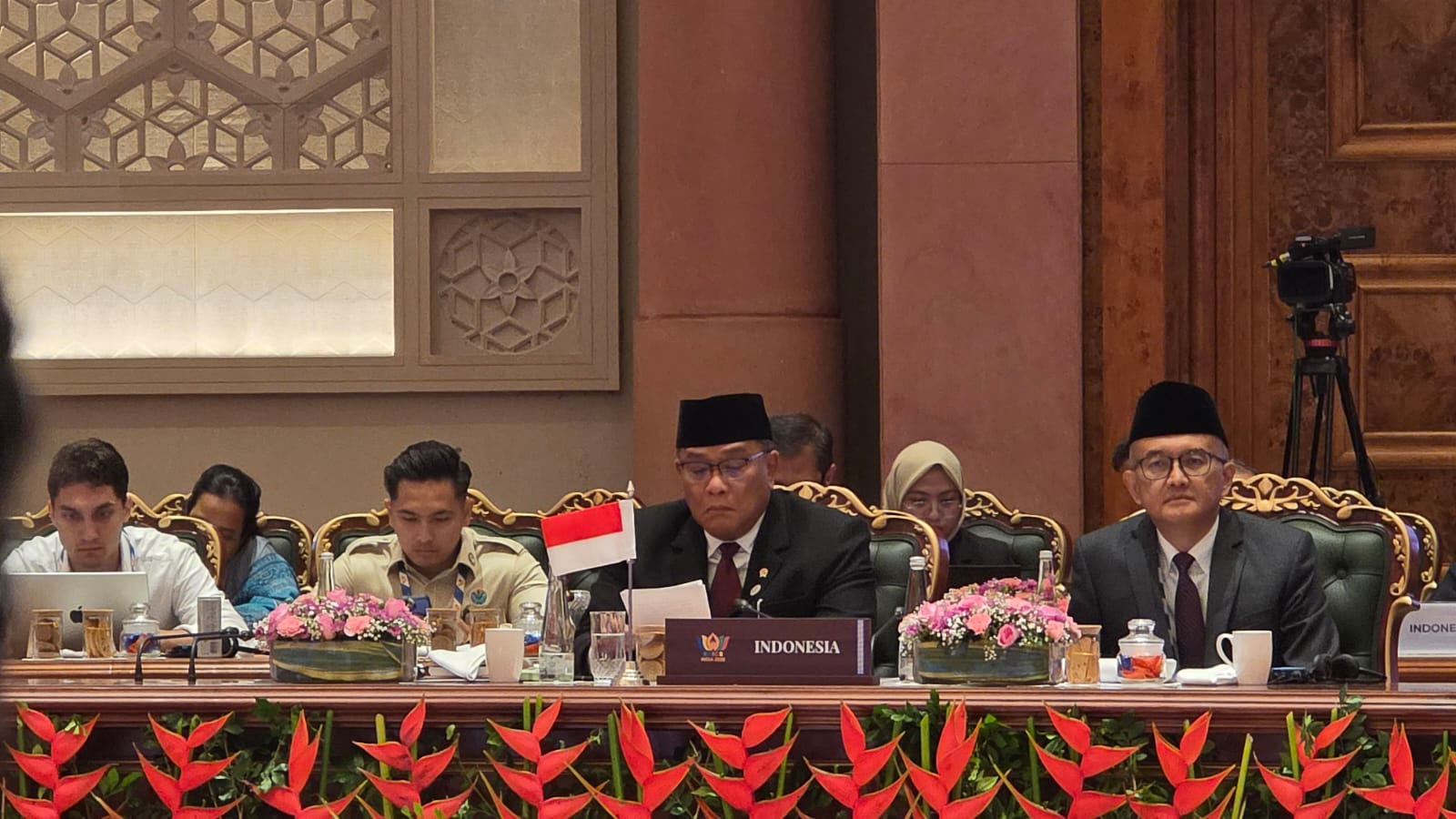
Enviro News Asia, Bali – The Ministry of Environment (KLH) reaffirmed its commitment to strengthening the governance of the carbon trading ecosystem through the Workshop on Synergy for Strengthening the Carbon Trading Ecosystem.
This strategic forum brought together ministries/agencies, local governments, academics, associations, the Indonesia Carbon Exchange, as well as national and international businesses.
“This forum aims to accelerate the implementation of Article 6 of the Paris Agreement and foster a credible, inclusive, and globally competitive Indonesian carbon market,” said Ary Sudijanto, Deputy for Climate Change Control and Carbon Economic Value Governance (PPITKNEK) at the Ministry of Environment, during the event, as stated in the official release from the Ministry of Environment of the Republic of Indonesia, Saturday (23/8/2025).
He emphasized that carbon trading is an essential instrument in achieving the Nationally Determined Contribution (NDC) targets while opening opportunities for a green economy.
“Through strengthening the carbon trading ecosystem, Indonesia not only reinforces its position in the global market but also drives the creation of green jobs that directly benefit communities,” Ary added.
At the forum, the Ministry of Environment reiterated Indonesia’s commitment to reducing greenhouse gas emissions by 31.89% independently and up to 43.20% with international support by 2030.
The government is also preparing its Second NDC, to be submitted to the UNFCCC in September 2025, which will include the marine sector.
Strategic discussions addressed policy strengthening, cross-sector readiness of carbon credit supply, domestic supply-demand needs, as well as the development of Bilateral Agreements and Mutual Recognition Arrangements (MRA), opening opportunities for recognition of Indonesian carbon units in international markets.
Various stakeholders provided constructive input. For example, the Indonesia Carbon Exchange highlighted plans for onshoring the carbon credit industry by 2028–2030.
The International Emissions Trading Association (IETA) emphasized supply-demand integrity in line with global standards, while TruCarbon pushed for one-way recognition to accelerate progress.
In addition, ACX encouraged cross-country collaboration, including with Malaysia and Argentina.
Meanwhile, ARMA Law stressed the need for technical regulations on methodology and authorization, while ACT called for an increase in the supply of high-quality carbon.
CORSIA and Fairatmos reminded stakeholders of Indonesia’s readiness for both compliance and voluntary markets, which require more robust frameworks and transparent international communication.
Wahyu Marjaka, Director of Carbon Economic Value Governance (TKPNEK), emphasized the importance of this momentum for consolidating national action.
“This workshop is an important momentum to align the steps of all stakeholders. With inputs from various parties, we are increasingly prepared to implement the carbon economic value, both for domestic and international markets, in accordance with Article 6 of the Paris Agreement,” Wahyu stated.
The TKPNEK Director added, “Indonesia has vast potential from the FOLU, energy, and waste sectors.
With solid governance and strong market support, Indonesia’s carbon market can become a driving force for the green economy while making a tangible contribution to climate change mitigation.”
The forum also highlighted the acceleration of sectoral NDC roadmaps, strengthening of carbon credit schemes such as the Joint Crediting Mechanism (JCM) and MRA with international institutions including Gold Standard, Verra, Plan Vivo, and GCC.
JCM is a bilateral cooperation system initiated by Japan and partner countries (such as Indonesia) to encourage investment in low-carbon development projects. MRA is a newer arrangement to recognize and record JCM carbon credits centrally in the national registry system, ensuring integrity and transparency in the carbon market. (*)