Enviro News Asia, Belém — The Ministry of Forestry of the Republic of Indonesia reaffirmed its commitment to strengthening global cooperation in forestry and environmental management through a bilateral meeting between Vice Minister of Forestry Rohmat Marzuki and UNEP Executive Director Inger Andersen at the UNEP Office, held on the sidelines of the COP30 Climate Summit in Belém, Brazil.
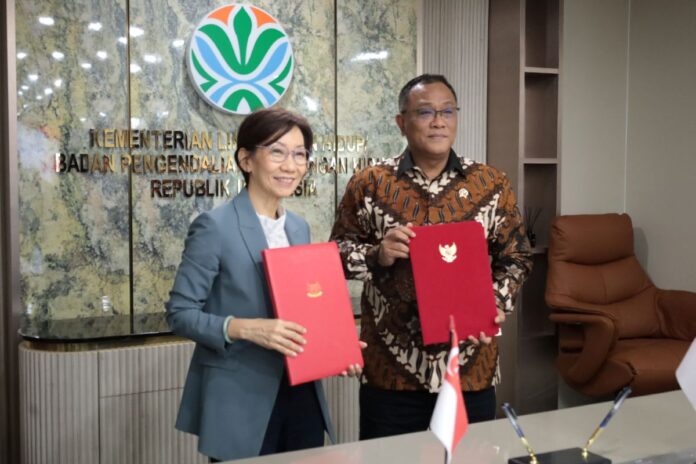
During the meeting, Vice Minister Rohmat Marzuki expressed appreciation for UNEP’s continued partnership and support under the Memorandum of Understanding (MoU) signed in October 2024 between UNEP and the Indonesian Ministry of Environment and Forestry (KLHK) prior to the institutional transition. Although the MoU has yet to be fully implemented following the restructuring, the Vice Minister emphasized that it remains a strong foundation for expanding future collaboration in forestry.
“We view the cooperation between Indonesia and UNEP as a crucial step to strengthen global action on forest protection, climate change mitigation, and community empowerment for those depending on forests,” said Rohmat Marzuki.
He outlined three strategic priorities of the Ministry of Forestry:
- Strengthening forest and land fire prevention;
- Developing a multi-forestry business model; and
- Accelerating recognition and empowerment of social and customary forests.
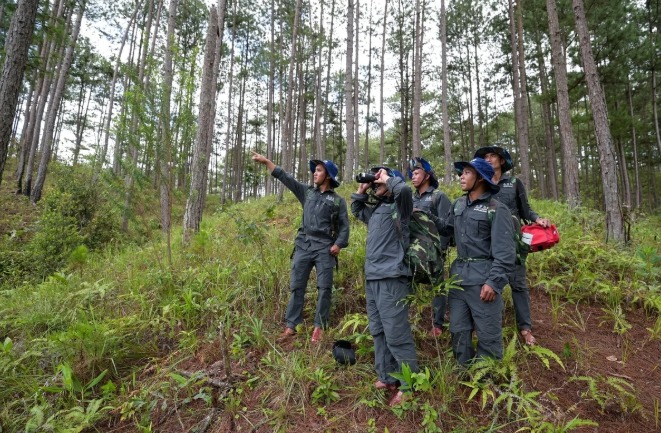
Despite these new priorities, the FOLU Net Sink 2030 Program remains a key national agenda to achieve net zero emissions in the forestry and land-use sector by 2030. Rohmat Marzuki underscored the importance of UNEP’s support in implementing this program, particularly in forest and peatland restoration, MRV system enhancement, environmental and social safeguards, capacity building, and innovative financing for REDD+.
The Vice Minister also shared Indonesia’s vision to position itself as a Global Carbon Market and Knowledge Hub, leveraging its vast tropical forest potential for innovation, knowledge exchange, and sustainable carbon-based investment.
In addition, Indonesia highlighted the need to strengthen cooperation through the International Tropical Peatlands Center (ITPC). The government envisions ITPC’s expanded role in carbon accounting methodologies, peat fire prevention, and restoration-based livelihoods, aligning with the FOLU Net Sink 2030 agenda and UNEP’s global mission.
“We believe that a renewed partnership between Indonesia and UNEP will reinforce Indonesia’s leadership in global forestry and climate action,” concluded Vice Minister Rohmat Marzuki. (*)