Enviro News Asia, Yokohama — On International Women’s Day 2026, under the theme “Rights. Justice. Action.”, the International Tropical Timber Organization (ITTO) highlighted five women leaders who are advancing sustainable tropical forest management across different regions and sectors. The celebration also coincides with ITTO’s 40th anniversary of international cooperation to support sustainable tropical forests.
These women represent diverse fields ranging from policy reform and forest governance to community mobilization, wildfire management, Indigenous knowledge protection, and sustainable timber trade. Their work demonstrates how inclusive leadership can strengthen environmental protection while ensuring fairness and benefits for forest-dependent communities.
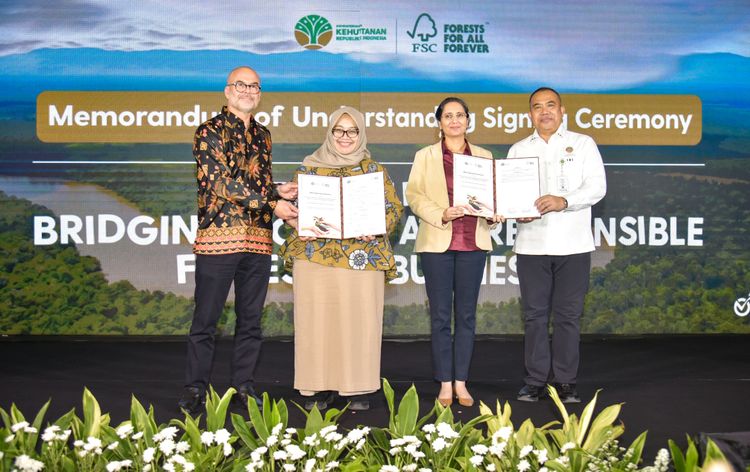
In Indonesia, Rina Kristanti, an International Cooperation Officer at the Ministry of Forestry, bridges the gap between field realities and national policy. She has led several initiatives to strengthen the Timber Legality Verification System (SVLK) and support small and medium-sized enterprises in complying with sustainability and traceability standards in the domestic wood industry. Rina also emphasized the importance of increasing women’s participation in forest governance and conflict mediation.
In Ghana, Lucy Amissah, Deputy Director and Principal Research Scientist at the CSIR-Forestry Research Institute of Ghana, works to reduce wildfire risks through community-based fire management. Her initiatives include awareness campaigns, firebreak construction, prescribed burning, and the mobilization of trained volunteer firefighting teams to protect forests and nearby communities.
Meanwhile, Rose Pélagie Masso of the African Women’s Network for Community Management of Forests (REFACOF) advocates for stronger land and forest rights for women across Africa. She promotes a gender-transformative approach to forest governance that encourages women’s participation in decision-making while supporting sustainable livelihoods through agroforestry, land restoration, and non-timber forest products.
In the Yucatán Peninsula of Mexico, Anselma Chalé Euan, founder of the Kuchil Kaab enterprise, preserves traditional Maya knowledge while promoting sustainable forest-based livelihoods. Her community initiative produces honey from Apis and Melipona bees as well as medicinal and cosmetic products derived from forest resources. Through training and community outreach, she helps local communities understand the connection between forests, bees, and human well-being.
In Australia, Cassandra Price, Assistant Director for International Policy at the Department of Agriculture, Fisheries and Forestry, focuses on strengthening global forest governance and promoting legal and sustainable timber trade. She also chaired the 62nd session of the International Tropical Timber Council, emphasizing the importance of international cooperation in addressing evolving global forestry challenges.
According to Sheam Satkuru, Executive Director of ITTO, the work of these five women demonstrates that inclusive, rights-based forest management is not merely a concept but a practical approach driven by leadership, research, and community engagement.
Through their efforts, they are helping ensure that tropical forest management remains environmentally sustainable while also promoting gender equality, transparency, and equitable development for communities that depend on forests. (*)