Enviro News Asia, Bandung — The Climate Change Center (PPI) of the Bandung Institute of Technology (ITB), in collaboration with the Directorate of Research and Innovation (DRI) ITB, held a seminar titled “The Role of International Financial Reporting Standards (IFRS) in Climate-Resilient National Development Planning” on Wednesday, July 30, 2025, at the IPTEKS East CC Auditorium, ITB Ganesha Campus.
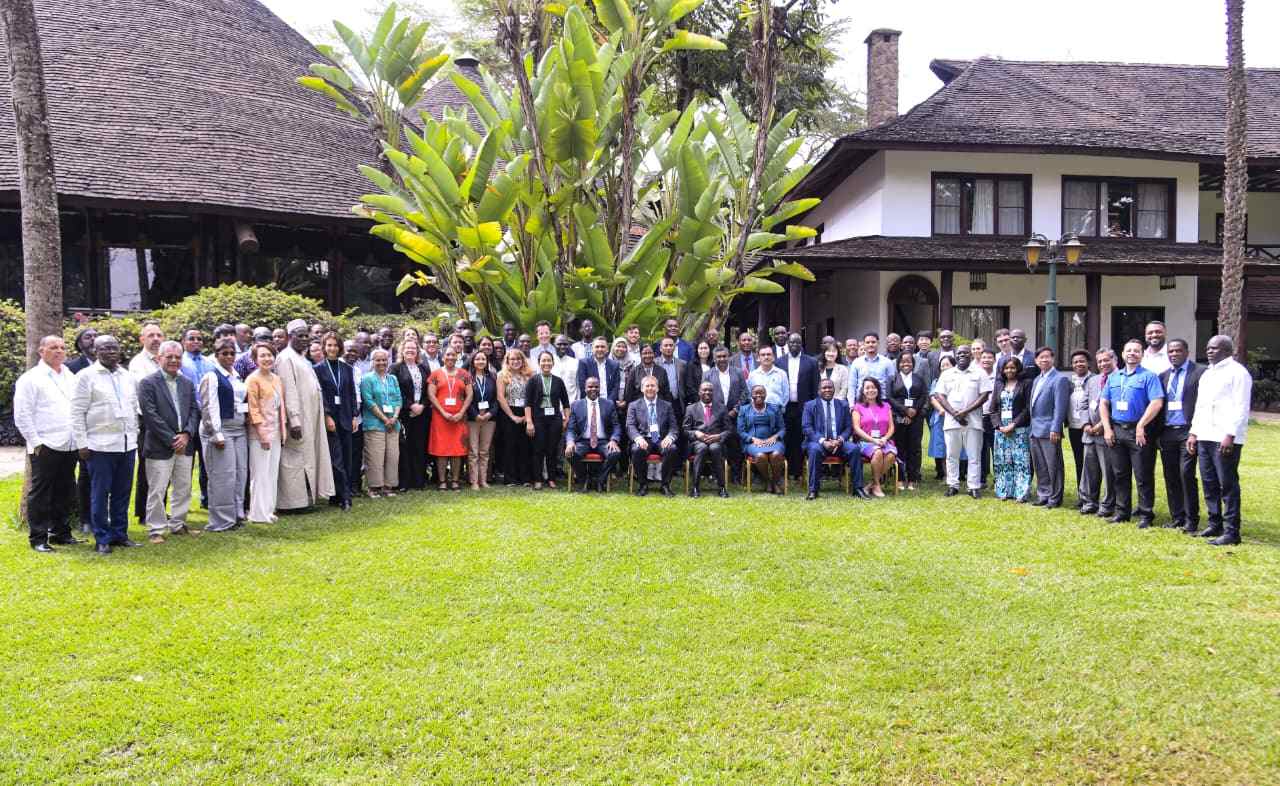
The seminar brought together stakeholders from government, industry, and academia, including representatives from the Financial Services Authority (OJK), Ministry of Environment (KLH), National Development Planning Agency (Bappenas), and PT PLN. More than 100 participants attended both in person and online.
Prof. Djoko Santoso Abi Suroso, Ph.D., Head of ITB’s Climate Change Center, stated that the seminar is part of an effort to bridge climate science with sustainable financial systems through climate risk-based reporting.
“We aim to connect expertise in climate change adaptation science with the financial sector,” he said in ITB’s official press release.
Djoko Santoso highlighted the growing demand from energy sectors such as Pertamina and PLN to assess the impacts of climate change—particularly in terms of adaptation, not just mitigation.
One example he cited was the Pertamina refinery in Balikpapan, which has experienced water shortages and rising temperatures, disrupting operational processes.
He emphasized that one of the main challenges ahead is formulating risk metrics that are truly relevant to climate risks, rather than relying solely on conventional indicators that lack sensitivity to rising temperatures, droughts, or extreme weather fluctuations.
Dr. Grandprix Thomryes Marth Kadja, M.Si., Deputy Director for Center Development at DRI ITB, noted that ITB currently hosts 25 centers and 7 multidisciplinary research hubs that drive cross-faculty and cross-disciplinary collaboration.
“Although the Climate Change Center may be small in numbers, it is highly active in contributing to strategic national issues. We fully support activities like this because environmental issues are not only multidisciplinary but also multidimensional,” he explained.
Grandprix acknowledged the complexity of linking financial systems with climate science but stressed the urgency of building this bridge.
“Hopefully, this IFRS Seminar will serve as a concrete step in contributing to climate resilience,” he said.
He also emphasized the importance of collective learning among stakeholders and hoped the seminar would mark the beginning of stronger collaboration between the research and practical sectors.
The seminar continued with presentations from speakers across sectors, who stressed the importance of adopting IFRS within the context of climate risks.
Key speakers included Rezza Frisma Prisandy, Ph.D. (Financial Services Authority), Anggi Pertiwi Putri, M.Env. (Bappenas), Franky Zamzani, S.Hut., M.Env. (Ministry of Environment), and Fanny Abdul Aziz (Vice President ESG, PT PLN).
They discussed ESG policy integration, climate risk reporting, and the challenges and opportunities in implementing IFRS for national development.
The discussion also featured insights from cross-sector respondents, including Dr. Tri Wahyu Hadi (ITB Climate Change Center), Vidya Trisandini Azzizi, Ph.D. (Resilience Development Initiative), Ir. David Gina Kimars Ketaren, M.SP. (Practitioner), and Prabandari I. Moerti (Indonesian Institute of Accountants).
The dynamic discussion reflected a shared understanding that climate challenges require collaborative approaches across disciplines and institutions. (*)