Enviro News Asia, Nairobi – The Ministry of Agriculture and Livestock Development (MoALD), through its Climate Change Unit, partnered with the Alliance of Bioversity International and CIAT under the CGIAR Climate Action Science Program to pilot a national monitoring and evaluation (M&E) framework for nature-based solutions (NbS) in the Chyulu Hills. The partners implemented the pilot under the Initiative for Climate Action Transparency (ICAT) project with technical support from the UNEP Copenhagen Climate Centre.
The institutions launched the pilot to track ecosystem restoration outcomes and strengthen climate resilience in one of Kenya’s critical landscapes. They designed the framework to generate credible data on environmental, social, and economic indicators linked to NbS interventions.
Kenya advanced this initiative amid growing global recognition that scaling nature-based solutions requires not only ambition but also robust standards, coordination, and accountability. While governments widely adopt NbS to address climate change, biodiversity loss, and ecosystem degradation, poorly designed or weakly monitored interventions can create unintended environmental and social risks. MoALD and its partners therefore prioritized a structured monitoring system to ensure quality implementation and measurable impact.
Globally, countries increasingly integrate NbS into climate strategies under the Paris Agreement. Approximately two-thirds of signatory countries include NbS in their Nationally Determined Contributions (NDCs), with many using them primarily for climate adaptation and others for mitigation. Kenya embedded NbS across its development and climate frameworks as part of its long-term resilience agenda.
Kenya’s updated NDC commits the country to reducing greenhouse gas emissions by 32 percent by 2030 compared to a business-as-usual scenario. The government supports this target through NbS actions such as restoring 5.1 million hectares of degraded landscapes, increasing national forest cover to at least 10 percent, and strengthening protection of water towers, wetlands, and coastal ecosystems. These commitments align with national instruments including the Kenya National Biodiversity Strategy and Action Plan and the Kenya National Adaptation Plan, which promote ecosystem restoration, biodiversity conservation, and equitable benefit-sharing.
Kenya also aligns its biodiversity and climate efforts with global frameworks such as the Kunming-Montreal Global Biodiversity Framework.
Despite strong policy integration, Kenya lacks a harmonized national system with standardized indicators to comprehensively track and evaluate NbS performance, particularly in agricultural and productive landscapes where most investments occur. This limitation constrains evidence generation, climate reporting, policy refinement, and access to climate and nature finance.
MoALD and its partners responded by co-developing a comprehensive NbS M&E framework that integrates environmental integrity, social inclusion, and economic viability metrics. The framework aims to strengthen Kenya’s capacity to monitor restoration progress, assess biodiversity outcomes, enhance agricultural productivity, and support adaptation and mitigation reporting under national and international commitments.
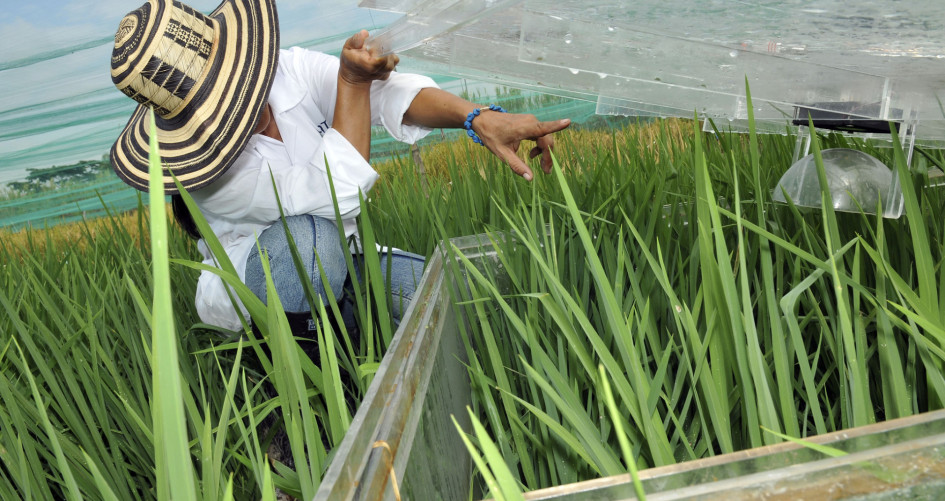
The partners adopted an inclusive and participatory process. They convened inception meetings, consultative workshops, and structured dialogues with development partners, community-based organizations, non-governmental organizations, academic and research institutions, and private-sector actors. Through the Chyulu Hills pilot, they tested indicators, refined methodologies, and generated practical lessons to inform national roll-out.
The Chyulu Hills pilot now provides Kenya with an operational reference model for building a transparent, science-based system that ensures nature-based solutions deliver measurable climate, biodiversity, and community resilience outcomes. (*)