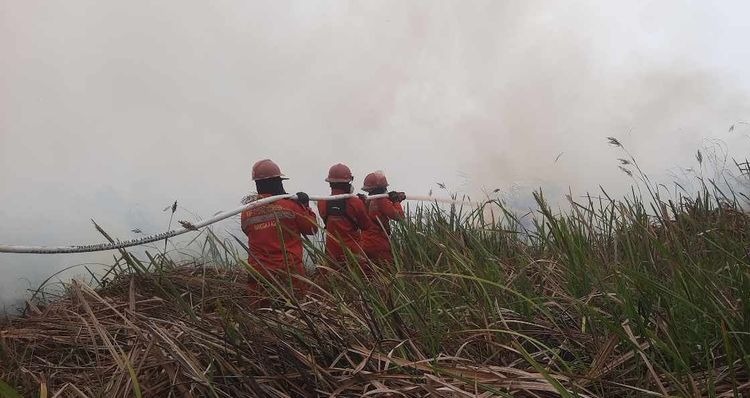
Enviro News Asia, Jambi – Forest and land fire (karhutla) response efforts in Jambi Province are being strengthened through collaboration among the central and local governments, the Indonesian Military and Police, the National Disaster Management Agency (BNPB), Manggala Agni, local communities, and the private sector, including PT Wirakarya Sakti (WKS), an APP Group business unit.
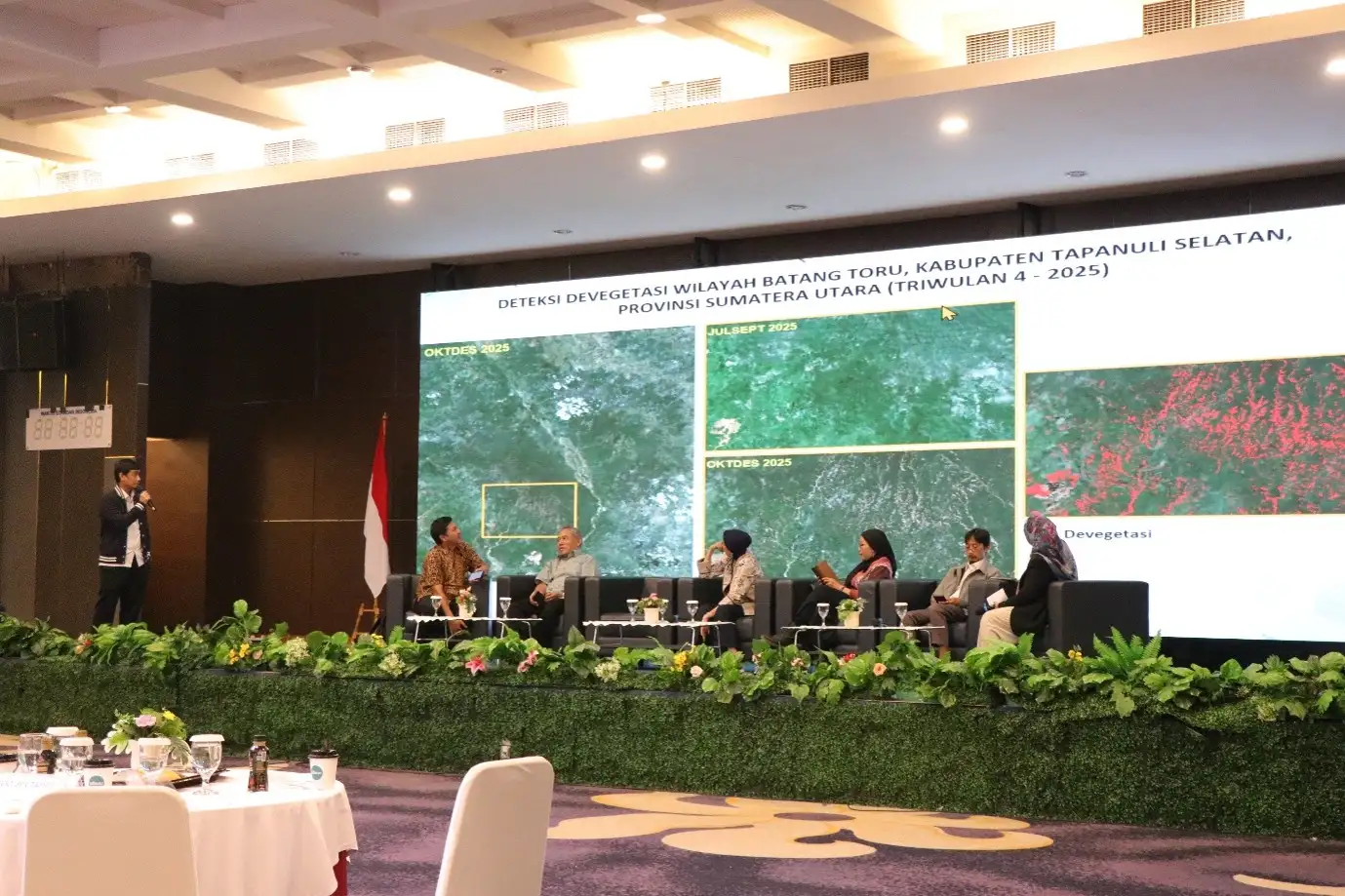
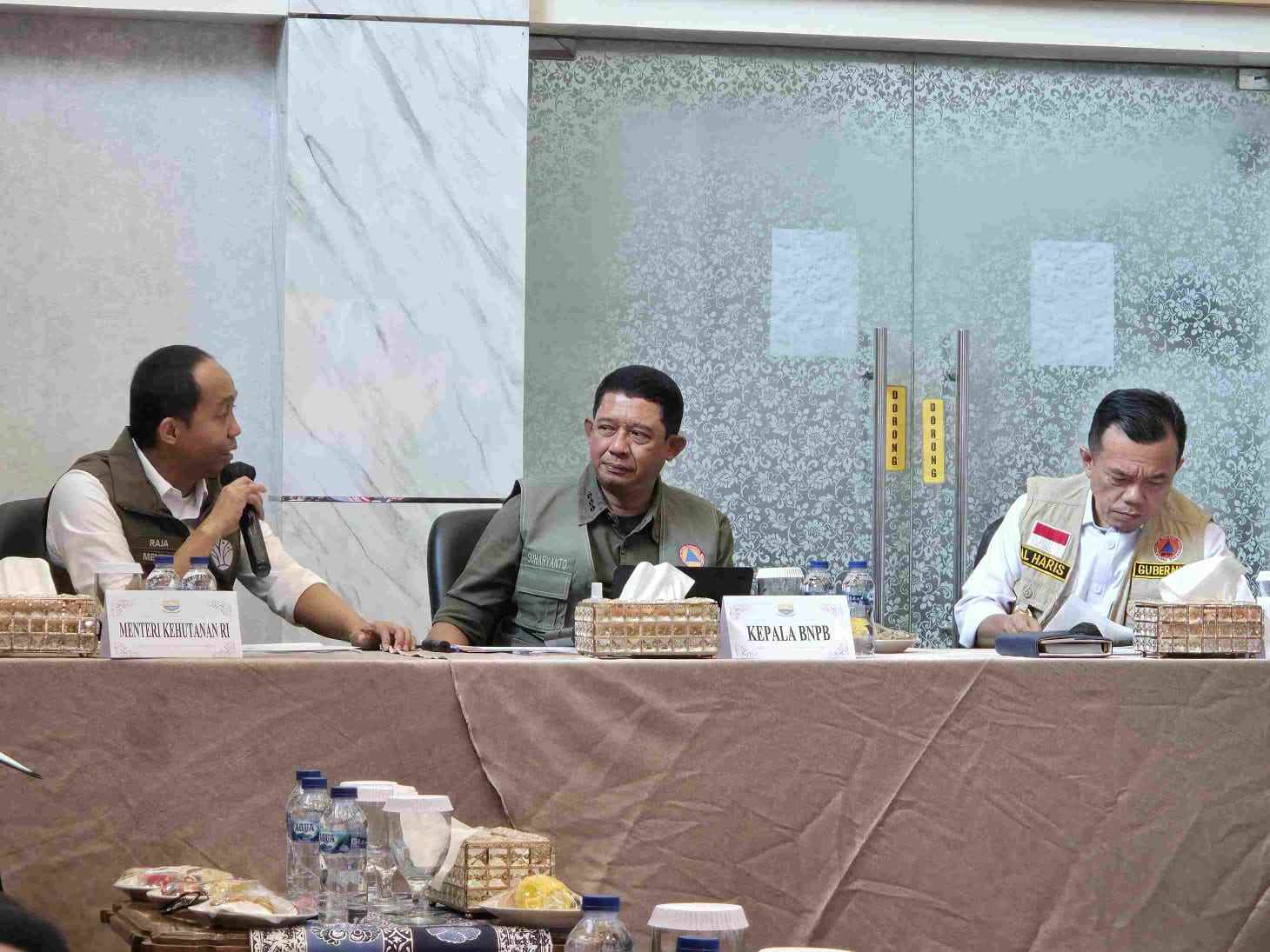
The strengthened coordination was highlighted during a Technical Coordination Meeting on Forest and Land Fire Management in Jambi held in Jambi on Wednesday (September 2, 2026). The meeting was attended by Minister of Forestry Raja Juli Antoni, BNPB Head Lieutenant General Suharyanto, Jambi Governor Al Haris, and representatives of the provincial forest and land fire task force.
The coordination focused on strengthening field operations through both ground and aerial operations, particularly as September is considered a critical period for forest and land fire control.
Minister of Forestry Raja Juli Antoni stressed the importance of maintaining preparedness and ensuring the involvement of all stakeholders during the peak fire-risk period.
“The peak of forest and land fires is in September. This is the battlefield, and September is where the real effort must be made. Therefore, all parties, including the government, military, police, and communities, are expected to participate together in addressing forest and land fires,” Raja Juli said.
BNPB Head Suharyanto said the capacity of ground task forces needed to be strengthened based on evaluations of previous fire response operations.
“Based on an analysis of the operations that have been conducted, ground task forces are indeed the most effective method for firefighting. Therefore, strengthening the ground task force is necessary to support firefighting operations,” Suharyanto said.
Jambi Governor Al Haris emphasized the need for rapid response to every reported fire.
“As soon as a fire is detected, we immediately locate the hotspot and deploy the regional task force for suppression, followed by water-bombing operations prepared by BNPB,” Al Haris said.
He noted that fires in peatland areas pose particular challenges because fires can continue burning beneath the surface even when flames are no longer visible.
“In peatlands, the fire may not be visible, but smoke can remain. Within hours, a new fire can emerge in the same location. That is the risk associated with peatlands. Our task is to ensure the area is completely cooled down,” he said.
Collaboration Between Task Forces and the Private Sector
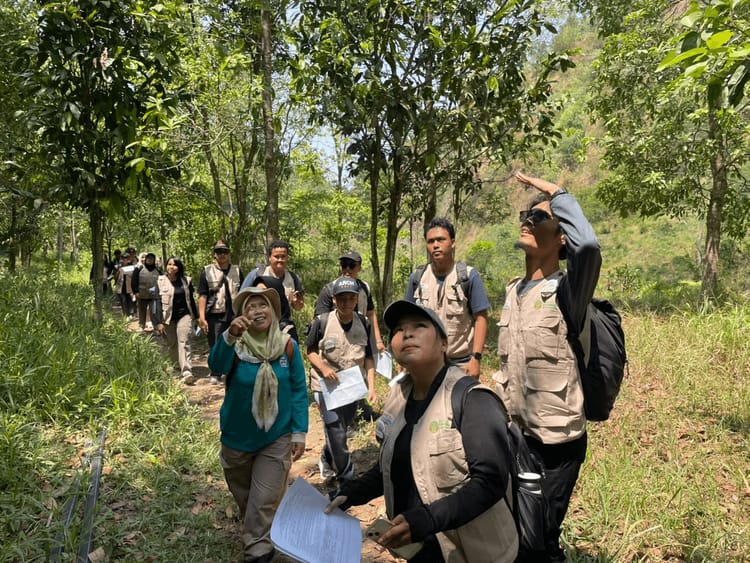
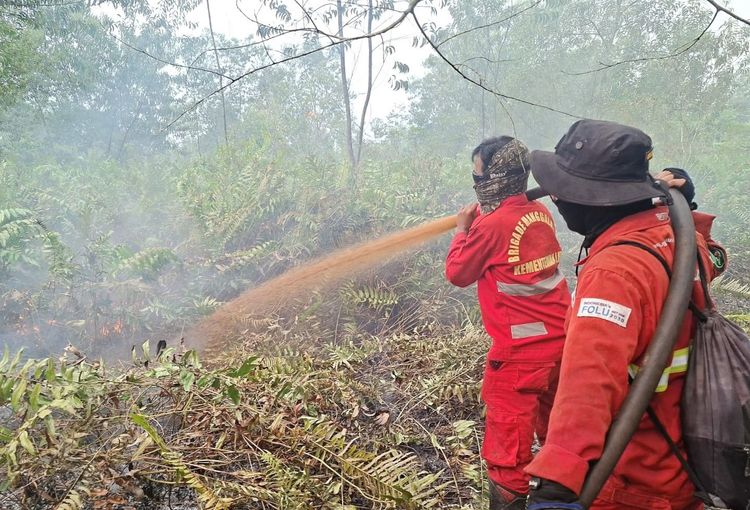
As part of the collaborative response, PT WKS has supported forest and land fire operations by deploying personnel and ground firefighting equipment, as well as supporting aerial operations in coordination with the forest and land fire task force and according to field requirements.
The company’s involvement was also highlighted by Governor Al Haris during his inspection of firefighting operations in the Londerang Peatland Protected Forest (HLG) area in East Tanjung Jabung Regency.
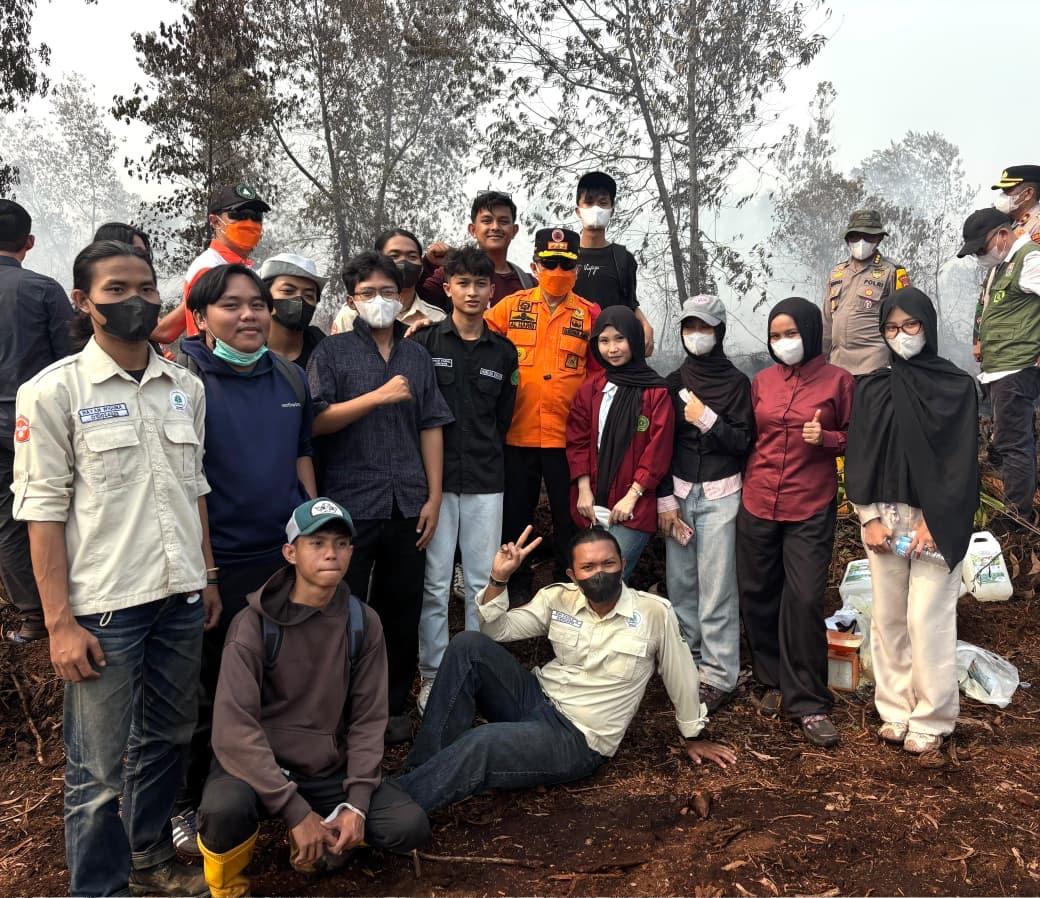
During the inspection, Al Haris observed the joint efforts of various agencies and stakeholders to control the fire and prevent it from spreading.
“Members of the military and police are on the ground today. The Pangdam [Military Commander] is directly involved with us, along with the Korem commander, the Jambi Police Operations Bureau, the Regional Disaster Management Agency, Manggala Agni, and PT WKS, which is also actively monitoring and working to prevent the fire from spreading,” Al Haris said.
PT WKS continues to coordinate with the local government, the forest and land fire task force, and other relevant stakeholders to support field response requirements. The support covers firefighting and cooling operations to ensure that fires are fully extinguished and do not reignite.
The collaboration among government agencies, security forces, communities, and the private sector remains essential to strengthening forest and land fire response, particularly in peatland areas where the risk of underground fires and fire recurrence is high. (*)