Enviro News Asia, Garut — Indonesia is accelerating efforts to develop carbon trading within the social forestry sector through a collaborative initiative involving the Ministry of Forestry, the United Nations Development Programme (UNDP), IPB University, local government authorities, and private sector partners.
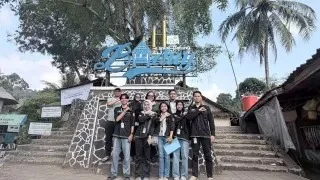
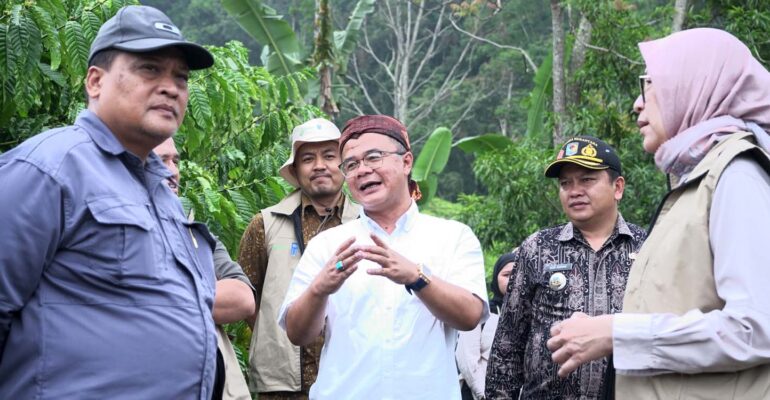
As part of this effort, the Directorate of Social Forestry Area Preparation (PKPS) and UNDP visited an IPB University-assisted community development site within the Integrated Area Development (IAD) program in Jayamekar Village, Pakenjeng District, Garut Regency, West Java.
The initiative aims to integrate environmental conservation with rural economic empowerment by creating an inclusive carbon trading scheme that directly benefits local communities while supporting sustainable forest management.
Director General of Social Forestry at Indonesia’s Ministry of Forestry, Catur Endah Prasetiani, welcomed the progress achieved in Jayamekar Village since the program began in 2023. She emphasized that social forestry should serve as a pathway toward improving livelihoods while maintaining forest sustainability.
“With support and mentoring from IPB University, we must seize this opportunity to improve community welfare. Our ultimate goal is clear: prosperous communities, sustainable forests, and long-term environmental preservation,” she said.
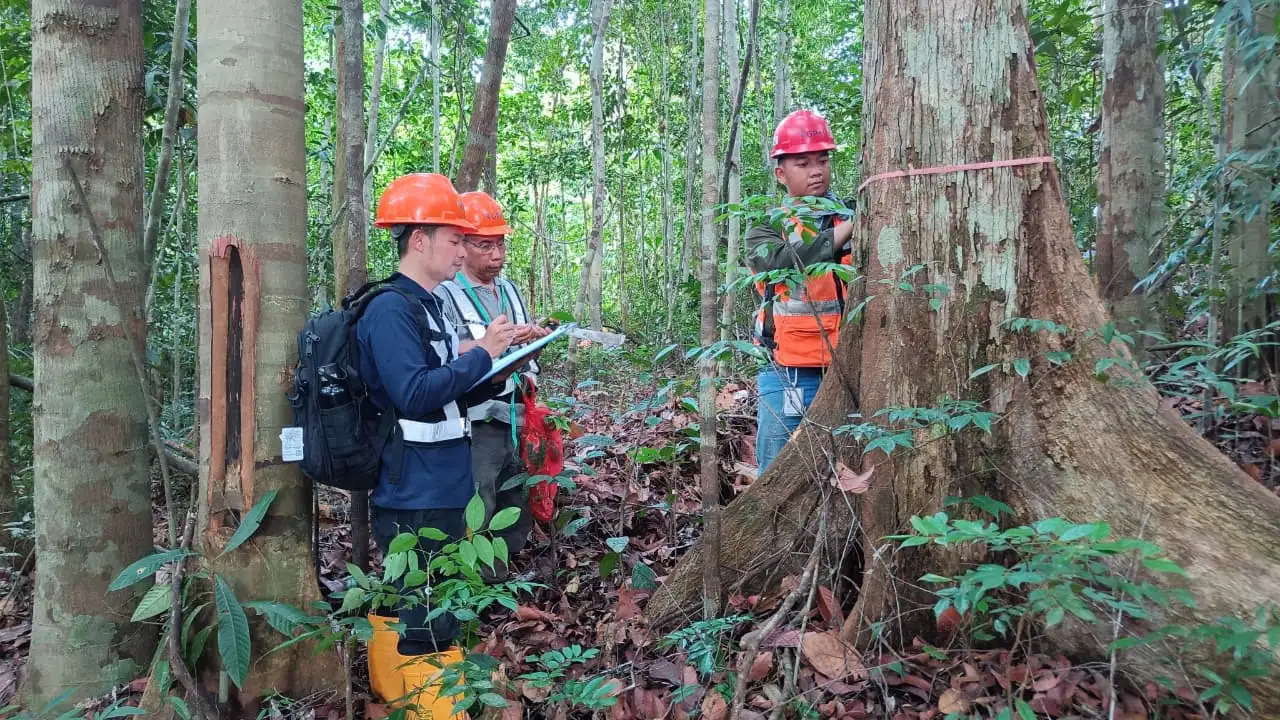
IPB University highlighted the importance of data-driven approaches in strengthening rural economies. Dr. Handian Purwawangsa, Head of the Institute for Agromaritime Development and Innopreneurship Acceleration (LPA2I), explained that measuring farmers’ activities, particularly tree planting efforts, forms the foundation of the program.
“Our approach focuses on measuring the number of trees planted by farmers. Through this model, social forestry offers a highly promising future for improving farmers’ welfare and quality of life,” Handian said.
The initiative positions local communities as key actors while ensuring that economic benefits generated through carbon trading mechanisms can be distributed directly to rural households.
The Garut Regency Government also expressed strong support for the program. Representing the regent, Assistant for Economic Affairs and Development Dedy Mulyadi described the initiative as highly relevant for optimizing the region’s natural resource potential.
The program has also received backing from the private sector. PT Astra International, through its Forest Carbon Productive Village Program (Hutan Karbon Produktif–Desa Sejahtera Astra), identified Garut as one of its most successful demonstration areas.
“Garut has become one of the best examples of how the Productive Carbon Forest program can generate tangible results for local communities,” said Bondan Susilo, Environment Department Head at PT Astra International.
UNDP reaffirmed its commitment to ensuring that carbon trading initiatives maintain high environmental and social integrity. UNDP representative Afifah Arifin noted that community empowerment efforts in Jayamekar have actively involved women and promoted inclusive participation.
“We strongly support this program. We have witnessed firsthand how women are actively involved in the empowerment process. At UNDP, our commitment is to ensure that carbon trading operates with high integrity and that local communities are fully involved in decision-making processes,” she said.
The visit concluded with a tree-planting activity and a tour of community-managed demonstration plots showcasing sustainable land management practices. Delegates also visited a local coffee processing facility that represents a successful example of downstream value addition within the social forestry sector.
The coffee production ecosystem demonstrates how communities can move beyond raw material production and participate in higher-value processing activities, creating additional economic opportunities while maintaining sustainable forest-based livelihoods.
The initiative is expected to strengthen local economic resilience while supporting Indonesia’s broader goals of forest conservation, carbon sequestration, and climate action through community-centered social forestry programs. (*)