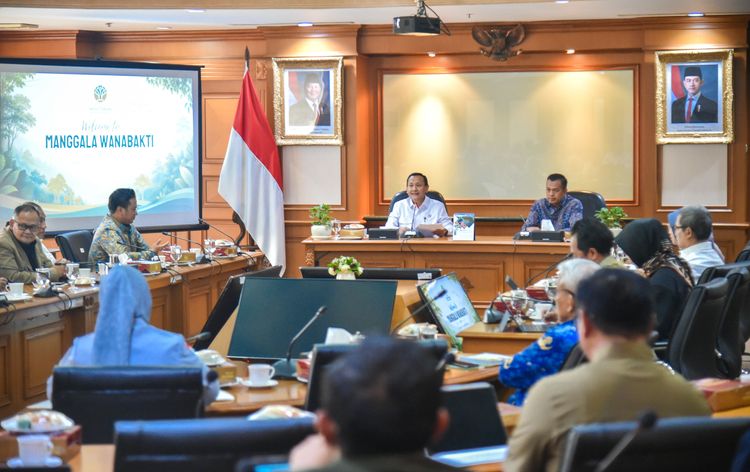
Enviro News Asia, Makassar — The Ministry of Forestry reaffirmed a new direction for Indonesia’s Social Forestry policy through the 2025 National Coordination Meeting on Social Forestry (Rakor PS) held in Makassar, South Sulawesi, on October 10–11, 2025.
Under the theme “Strengthening Synergy, Embracing the New Direction of Social Forestry Policy,” the event marked a renewed commitment to cross-sector collaboration toward improving the welfare of forest communities.
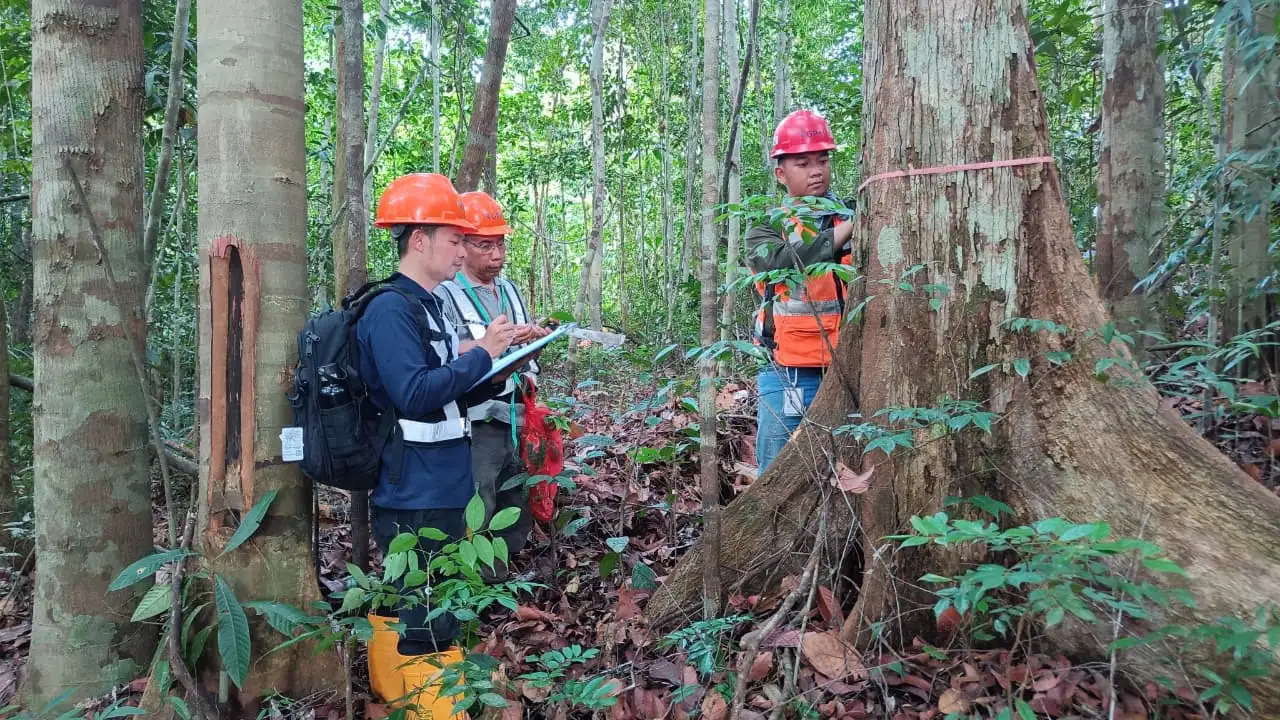
Minister of Forestry Raja Juli Antoni stated that the Social Forestry program has now provided management access to 8.32 million hectares of forest, involving 1.4 million households and establishing 15,925 Social Forestry Business Groups (KUPS) across Indonesia.
“Our challenge moving forward is to ensure that every program truly benefits the people. We are shifting from simply providing access to enhancing quality and productivity,”
said Minister Raja Juli Antoni in his closing remarks.
He emphasized three key priorities for the new policy direction:
- Downstream processing and increasing the added value of community forest products;
- Eradicating extreme poverty through Social Forestry; and
- Developing Integrated Area Development (IAD) to link production, processing, and markets.
Director General of Social Forestry Catur Endah Prasetiani added that 2025 serves as a year of reflection—“A Year of Impact”—highlighting tangible achievements delivered through policies and field actions. She also stressed the importance of multi-stakeholder synergy to accelerate the achievement of national Social Forestry targets.
“Cross-sector and intergovernmental collaboration must become the driving spirit to realize sustainable forests and prosperous communities,”
she said.
Several community forest business groups have already entered export markets, including spices to India and China and coffee to Germany and Europe, signaling the rise of a green economy driven by local forest enterprises.
With this new policy direction, the government aims to position Social Forestry as a key driver of Indonesia’s green economy, ensuring that forest conservation goes hand in hand with tangible improvements in community welfare. (*)