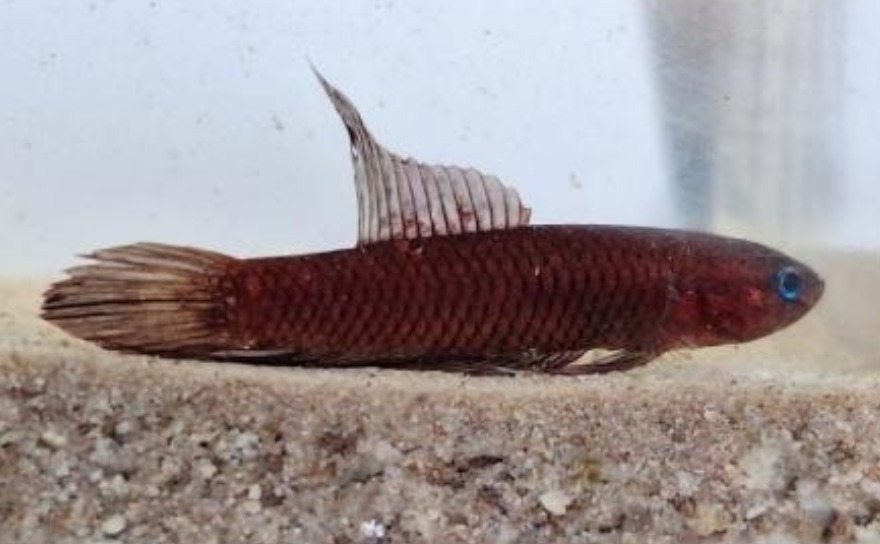
Enviro News Asia, Pangkalpinang — University of Bangka Belitung and Badan Riset dan Inovasi Nasional have initiated a joint conservation program to protect Betta burdigala, an endemic freshwater species from Bangka Belitung that is currently classified as critically endangered by the International Union for Conservation of Nature.
The collaboration, announced in February 2026, focuses on preventing the extinction of the species, which is native to peat swamp ecosystems and found nowhere else in the world.
The program is led by BRIN’s Center for Applied Zoology Research in partnership with field researchers from UBB’s Faculty of Agriculture, Fisheries, and Marine Sciences. The initiative aims to address the root causes of the species’ decline, particularly habitat fragmentation and genetic degradation.
According to researchers, decades of tin mining, land conversion, and peatland degradation have disrupted natural habitats and isolated populations of Betta burdigala, increasing the risk of inbreeding and reducing genetic diversity.
Ahmad Fahrul Syarif, the lead researcher from UBB, stated that the conservation effort extends beyond captive breeding. He explained that the program integrates domestication strategies with sustainable genetic management to support both population recovery and long-term survival in natural habitats.
The research team plans to conduct genetic mapping of remaining populations and develop controlled breeding systems to maintain genetic variation. These measures are considered essential before any future reintroduction into the wild can be implemented.
In addition to species-specific conservation, the project is expected to produce a scientific framework that can be applied to other endemic freshwater species across Indonesia, a country known for its high biodiversity but also facing significant ecological pressures.
The initiative highlights growing concerns over biodiversity loss in Indonesia, particularly in fragile ecosystems such as peat swamps, and underscores the importance of science-based conservation efforts to prevent irreversible species extinction. (*)