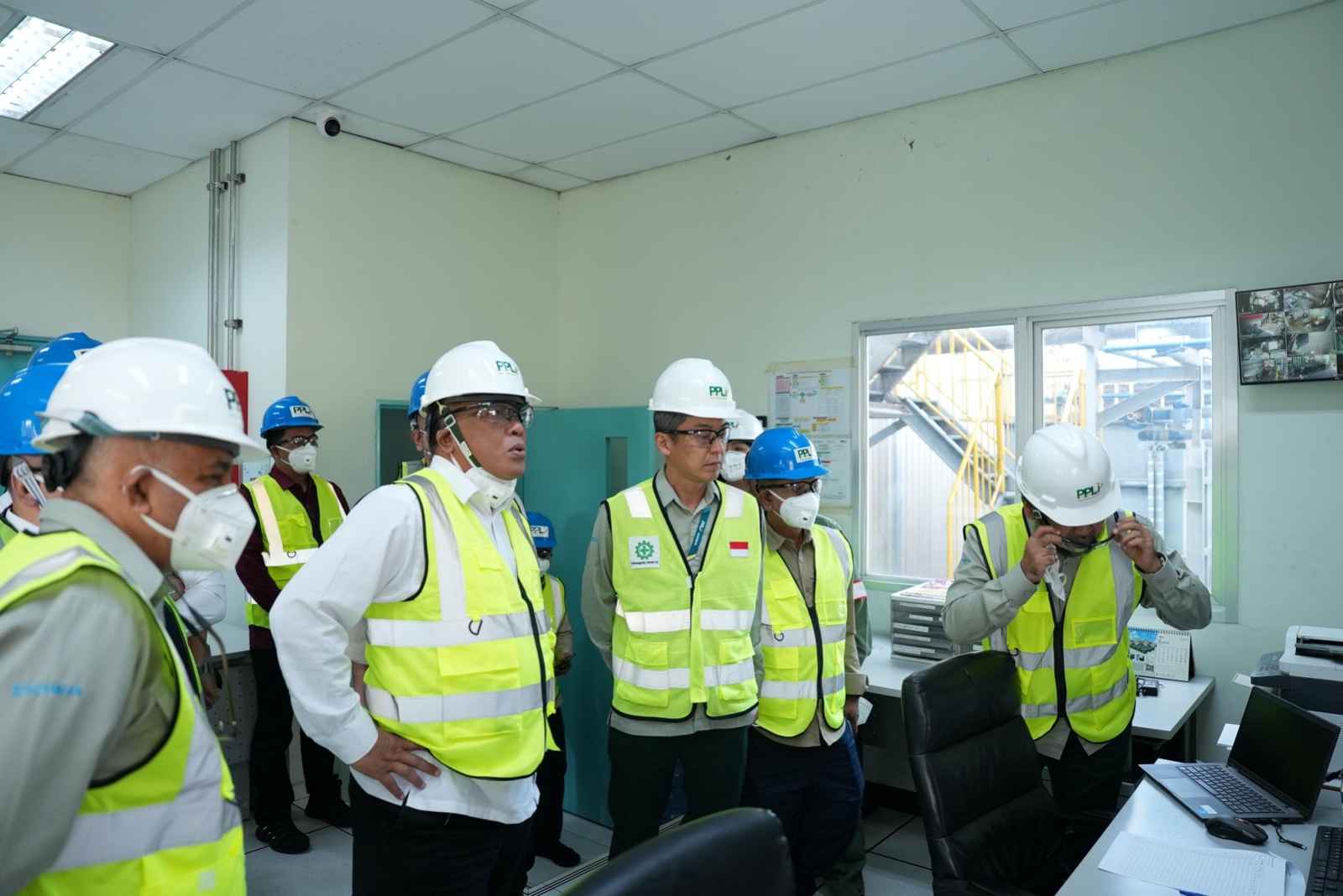
Enviro News Asia, Sukabumi – Minister of Environment Hanif Faisol Nurofiq officially inaugurated a Refuse-Derived Fuel (RDF) based integrated waste processing facility in Sukabumi Regency, West Java, on Thursday (31/7/2025).
This waste processing facility is an initiative that transforms waste into clean energy with high economic value.
The facility is a result of a strategic collaboration between the Sukabumi Regency Government and PT Semen Jawa, with a processing capacity of 333 tons of waste per day.
This waste is processed into alternative fuel used in the cement industry, replacing fossil fuels.
“This step is not symbolic. It is a real answer to the waste crisis that Sukabumi has been facing. Based on verification by the Ministry of Environment, waste generation reaches 827 tons per day, or about 301,855 tons per year. However, only 3.28% is successfully managed, while the rest pollutes the environment or is piled up in the Cimenteng landfill, which is now overloaded,” said Minister Hanif Faisol Nurofiq in an official statement.
In response to this emergency, the Ministry of Environment has imposed administrative sanctions through Ministerial Decree/Head of BPLH Number 758 of 2025, which mandates the cessation of all operations at the Final Disposal Site (TPA) for a maximum of 180 days and the construction of a new TPA based on sanitary landfill technology within one year.
RDF has been offered by the government as a fast, affordable, and sustainable solution.
Refuse-Derived Fuel is a technology that utilizes non-organic waste with high calorific value, such as plastic, fabric, paper, and rubber, to be processed through sorting, drying, and shredding into alternative fuel.
This technology not only reduces pressure on landfills but also lowers carbon emissions, conserves the use of fossil fuels, and promotes a circular economy.
“This RDF initiative supports the targets of the 2025–2029 National Medium-Term Development Plan (RPJMN), which are 51.21% of national waste management by 2025 and 100% by 2029. RDF is very economical, at only about Rp300,000 per ton. This is the cheapest and most affordable option for local governments,” said Minister Hanif.
Minister Hanif also stressed the need for a paradigm shift in waste management, from an “end-of-pipe” approach to a system based on technology and multi-stakeholder collaboration.
The Ministry of Environment/BPLH is currently providing intensive assistance to local governments throughout Indonesia to strengthen sustainable waste management systems.
Country Director of SCG Indonesia, Warit Jintanawan, stated that the construction of the RDF facility in Cimenteng is part of SCG’s commitment to inclusive green growth.
This technology is expected to be a catalyst in creating a greener and low-carbon region, while also accelerating the use of renewable energy in the industrial sector.
“SCG is committed to supporting the efforts of the Sukabumi Regency Government in achieving optimal and sustainable waste management. RDF reflects a concrete step towards the clean energy transition,” said Warit.
President Director of PT Semen Jawa, Peramas Wajananawat, added that the collaboration in building this RDF facility is an implementation of the ESG 4 Plus principles promoted by SCG, including the target of achieving net-zero emissions by 2050.
“With more than 10 years of experience managing RDF in Thailand, we believe this technology will have a significant impact on the environment and the local economy,” he concluded.
Minister Hanif expressed his appreciation to the Sukabumi Regency Government and PT Semen Jawa for their commitment and innovation.
Minister Hanif hopes that this initiative can become a national model for modern, low-emission, and sustainable waste management.
“This is a tangible manifestation of the transition towards a future waste management system. And Indonesia is ready to be a pioneer,” Minister Hanif concluded. (*)