Enviro News Asia, Aceh— Young people in Aceh are being encouraged to take a more active role in communicating forestry and environmental issues, particularly in an era when social media has become a major source of information about disasters, conservation and climate-related challenges.
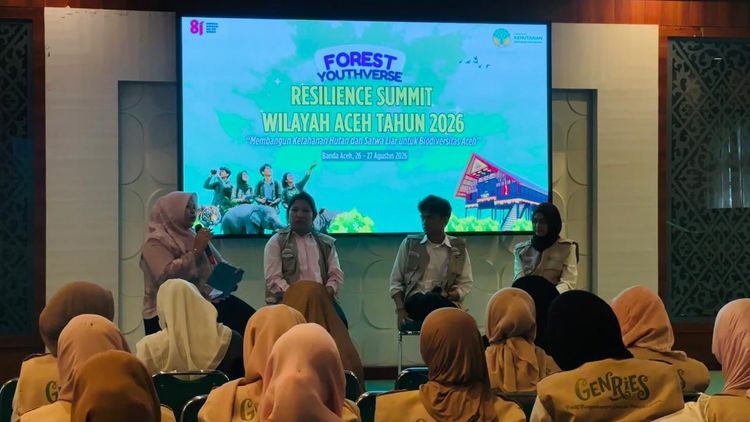
The message emerged during the Youth Talk Forest Youthverse (FYV) Resilience Summit Aceh 2026, held in Aceh on August 28, which brought together young people to exchange perspectives and experiences on hydrometeorological disasters, forest conservation and youth-led environmental action.
Organized by the Pusat Generasi Lestari (Pusgenri), the event highlighted the importance of strengthening the role of young people not only as supporters of forest conservation but also as responsible forestry communicators capable of improving the quality of information and encouraging action within their communities.
The discussion featured three young speakers with different backgrounds: Evriani Rotua Gea, a master’s student at Universitas Syiah Kuala and veterinary assistant; Jamalul, a law student at the university; and Jihan Asyifa, a youth environmental activist and former Parliament Ambassador.
Evriani highlighted the challenge of misinformation surrounding environmental issues and disasters on social media. She urged young people to verify information before accepting or sharing it.
She also emphasized the role of youth in bridging information gaps between conservation initiatives and communities, particularly in raising public understanding of wildlife and conservation efforts.
Jamalul, drawing on his experience traveling across Aceh and observing disaster-related issues firsthand, stressed that environmental challenges require collective awareness and responsibility.
He argued that forest and environmental protection cannot be addressed by government institutions, communities or individuals working independently. Instead, collaboration and a shared sense of responsibility are needed to build effective solutions.
Meanwhile, Jihan encouraged young people to translate environmental awareness into concrete action. She pointed to activities such as tree planting, social media campaigns and community engagement as examples of how young people can contribute directly to environmental protection.
The summit also emphasized that environmental communication in the digital era extends beyond activities in the field. Young people can contribute by ensuring that information circulating online is accurate, constructive and capable of encouraging wider public participation.
The initiative reflects a growing effort to position the younger generation as partners in forestry conservation and disaster resilience. By combining digital literacy, environmental awareness and community action, young people are expected to play a stronger role in protecting Indonesia’s forests and strengthening public resilience to environmental risks. (*)