
Enviro News Asia, Jakarta — Indonesia needs stronger regulations, reliable emissions data and clear reduction targets to curb methane emissions from its energy sector, which are estimated to have risen by 19 percent since the country joined the Global Methane Pledge in 2021.
Methane emissions from the sector reached an estimated 1.29 million tonnes in 2025, according to the Institute for Essential Services Reform (IESR). Methane is the second-largest contributor to global warming after carbon dioxide, making its reduction an important opportunity to slow the pace of climate change.
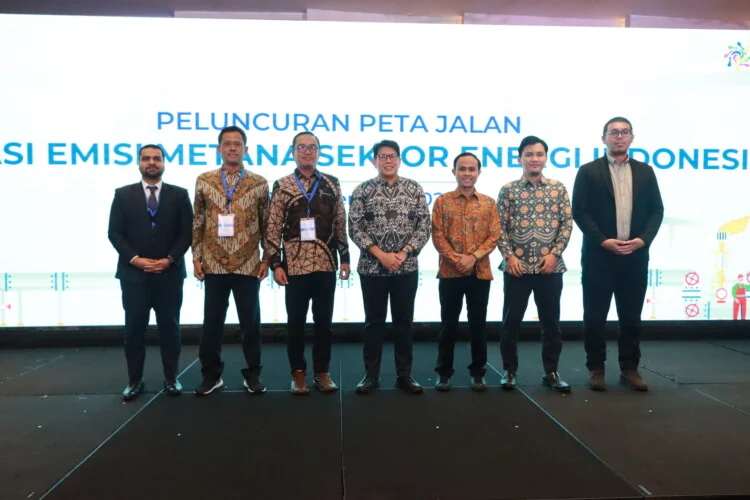
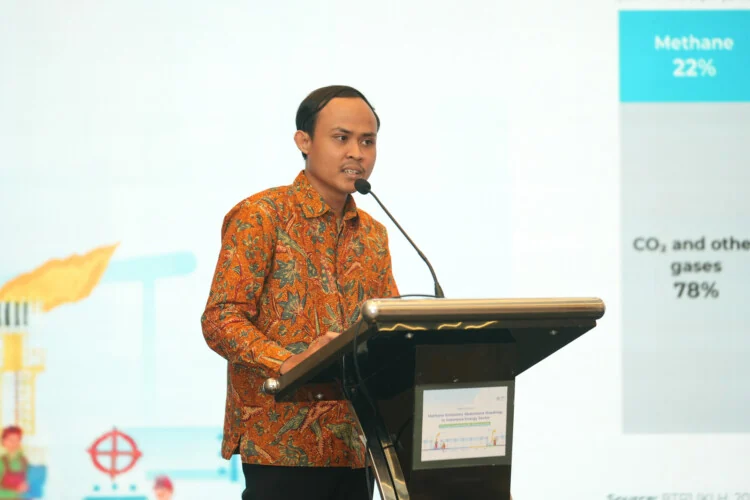
IESR launched its Methane Abatement Roadmap for Indonesia’s Energy Sector on Nov. 24, outlining mitigation measures, financing requirements and potential economic and public health benefits.
IESR chief executive Fabby Tumiwa urged the government to establish a clear target for reducing methane emissions from the energy sector by 2030. He said the target should align with the Global Methane Pledge, which calls for a 30 percent reduction in global methane emissions from 2020 levels by the end of the decade.
According to IESR’s assessment, Indonesia would need to cut methane emissions from its energy sector by 62 percent below the projected 2030 level under a business-as-usual scenario to meet the proposed target.
Fabby also called for wider regulation of gas flaring, beginning with facilities that are ready to implement controls. He said Indonesia should adopt a phased reduction strategy, starting with improved emissions data and stronger reporting mechanisms.
Haruki Agustina, director of climate change mitigation at the Ministry of Environment, said methane control was also important for improving resource management and supporting national energy security.
Indonesia had already conducted inventories of methane sources, she said, but needed stronger governance through clear policies, sector-specific targets, roadmaps and appropriate technologies.
Joko Hadi Wibowo, director of oil and gas engineering and environment at the Ministry of Energy and Mineral Resources, said oil and gas facilities, both upstream and downstream, were relatively well positioned to reduce methane emissions in the near term compared with sectors such as agriculture, livestock and forestry.
However, he identified data accuracy and emissions reporting as major obstacles. The ministry’s Directorate General of Oil and Gas has begun exploring partnerships to develop a monitoring and reporting system for greenhouse gas emissions, including methane, he said.
Hanny Fauziah, deputy coordinator for coal investment and cooperation at the ministry, said the Directorate General of Mineral and Coal had also started compiling greenhouse gas emissions data.
She stressed that methane reduction measures required accurate and verifiable inventories, supported by stronger methodologies and regulations introduced gradually in line with industry readiness.
IESR energy systems modeller Vicky Firmansyah said the institute had assessed 1,054 concessions and working areas and identified 14 blocks with high methane emission intensity.
The assessment found that the oil and gas sector was better prepared to implement methane reduction measures than the coal industry. Some mitigation options in oil and gas operations could also generate financial returns for companies, while coal-sector reductions would require greater support through incentives, pilot projects and capacity building.
The roadmap also highlighted potential health and productivity benefits. IESR emissions and fuel analyst Agus Adi Putra said methane mitigation between 2020 and 2040 could prevent the loss of 363,000 healthy life years in Indonesia associated with illness, disability and premature death.
The same measures could preserve an estimated 540 million hours of productive work over the period. Women workers would account for around 32 percent of those benefits, equivalent to 172.8 million working hours.
Harshit Agrawal, a senior gas specialist at the World Bank, said oil and gas companies could begin reducing methane emissions by detecting and repairing leaks in pipeline connections, valves and other equipment.
Such measures could be introduced relatively quickly and at low cost because the required technologies were already available and proven. The World Bank and state-owned energy company Pertamina have implemented leak detection and repair programmes at two liquefied natural gas facilities.
Agrawal recommended starting with small-scale leak detection and repair programmes before moving to projects requiring larger investments.
Josua Partogi, head of the environmental, social and technical evaluation division at state-owned infrastructure financing company PT Sarana Multi Infrastruktur, said some methane reduction measures in the oil and gas sector could deliver economic benefits exceeding their implementation costs.
This could allow oil and gas companies to finance some emissions reduction efforts using their own resources, he said. (*)